Book guide and evaluation
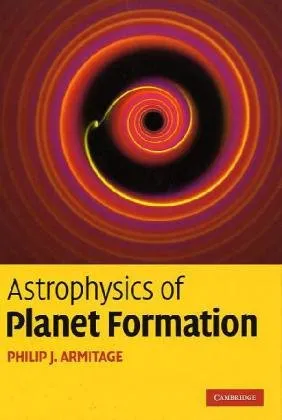
Astrophysics of Planet Formation
Philip J. Armitage
English
Beginner
Astronomy
4.6 / 5
0 reviews
2010
Published
296
pages
592
views
Introduction to Astrophysics of Planet Formation Welcome to a comprehensive exploration of the processes and principles that govern the formation of planets. "Astrophysics of Planet Formation" by Philip J. Armitage delves into the dynamic world of planetary science, offering r
Before you read
What will you get from this book?
Introduction to Astrophysics of Planet Formation
Welcome to a comprehensive exploration of the processes and principles that govern the formation of planets. "Astrophysics of Planet Formation" by Philip J. Armitage delves into the dynamic world of planetary science, offering readers a robust understanding of how planets emerge, evolve, and exist in the vast galaxy. This introduction serves as an insightful guide to the key components of the book, offering a detailed summary, essential takeaways, memorable quotes, and the significance of this work within the field of astrophysics.
Detailed Summary
The "Astrophysics of Planet Formation" provides a foundational framework for understanding the critical stages in the birth and evolution of planets. The book elucidates the initial formation of stars and the subsequent birth of circumstellar disks, where planet formation takes place. Delving into the intricate theories and mathematical underpinnings, the text covers a broad spectrum of topics such as protoplanetary disk physics, the core accretion versus disk instability models, and the complex interactions that drive the accretion processes leading to planetary formation.
The book balances theoretical insights with observational evidence, drawing upon the latest research and data gathered from telescopes and space missions. It navigates through the breakthroughs in discovering exoplanets and what these distant worlds reveal about our theories of planet formation. The text also addresses the evolution of these planets post-formation and the conditions that might enable the emergence of life, providing a holistic view of planetary science.
Key Takeaways
- Understanding the role of protoplanetary disks in planet formation.
- Insight into the two dominant theories of planet formation: core accretion and disk instability.
- Exploration of the influence of stellar and disk properties on planet formation.
- Comprehensive view on how observational data supports and challenges theoretical models.
- Discussion on the potential for habitable conditions and life's emergence beyond Earth.
Famous Quotes from the Book
"In the theater of cosmic evolution, planet formation is both a product and a process, a narrative that spans millions of years and billions of kilometers."
"Understanding planet formation is as much about decoding ancient cosmic scripts as it is about forecasting the future of our own solar system."
Why This Book Matters
"Astrophysics of Planet Formation" is an indispensable resource for students and professionals in the field, offering a thorough and scientific examination of the mechanics behind planetary genesis. The book stands out for its integration of theoretical frameworks with empirical data, making it a critical reference point for current research and future investigations in planetary science.
The book's significance is profoundly tied to its timing during an era when exoplanet discoveries are rapidly expanding our understanding of the universe. This work aids researchers in interpreting these findings through the lens of theoretical science while encouraging new lines of inquiry and technological advancements in astronomical measurement and modeling.
Furthermore, this text plays an essential role in education, providing a structured and detailed exposition suitable for graduate courses while also serving as an advanced entry point for anyone determined to explore the intricacies of how planets come to be.
Ask this book
Your question is answered in the context of this title and author. Each answer uses 2 points.
Sign in to ask the book assistant.
Reader reviews
0 reviews, 4.6 average out of 5
No reviews yet
If you have read this book, help the next reader with your experience.
Write a review
Sign in to publish a review.
Reader questions and answers
Ask a focused question and learn from the community.
Sign in to ask or answer a question.
No questions yet
Be the first to ask a clear, useful question.
What to read next
Related references that continue this learning path.