Carbon-related materials in recognition of Nobel Lectures by Prof. Akira Suzuki in ICCE
Endo, Tamio;Hui, David;Kaneko, Satoru;Mele, Paolo;Tanaka, Katsuhisa;Tsuchiya, Tetsuo;Yoshimura, Masahiro
2017
View book
Book guide and evaluation
Uderzo
0 reviews
Published
pages
views
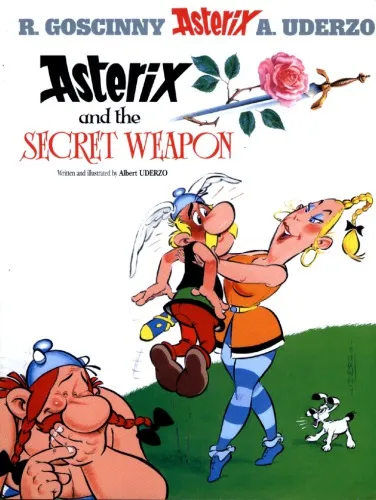
Asterix adventure 29 French graphic novel, historical satire Explore Asterix adventure 29, a rich blend of humor and cultural insight set in the beloved Gaulish village. Analytical Summary The twenty-ninth installment in the legendary Asterix series, Asterix adven
Before you read
The twenty-ninth installment in the legendary Asterix series, Asterix adventure 29, offers readers an intricate blend of visual artistry and sharp social commentary. While the exact publication year is currently information unavailable due to no reliable public source, the work stands firmly within the tradition established by René Goscinny and Albert Uderzo, shaped by decades of storytelling that combine accessible humor with multi-layered satire.
In keeping with the series’ tradition, this entry situates its plot within the familiar Gaulish village resisting Roman occupation, yet expands its focus to highlight broader issues of culture, identity, and resilience. The narrative structure is carefully woven, balancing episodic encounters with an overarching thematic unity. Characters old and new are deployed to challenge political authority, question social norms, and celebrate linguistic dexterity. The comedic timing, coupled with meticulous illustration, ensures that the saga remains engaging for both casual readers and seasoned academics analyzing sequential art.
Artists and storytellers studying Asterix adventure 29 will note its emphasis on cross-cultural exchanges, satirical depictions of governance, and the subtle critique of empire. Linguistic puns and visual allegory emerge as powerful devices, conveying meaning across multiple layers without alienating readers unfamiliar with prior volumes. It is a testament to the adaptability and enduring relevance of the franchise.
Through scholarly examination and casual enjoyment alike, several core insights emerge from Asterix adventure 29 that illuminate its impact within graphic literature.
First, the narrative exemplifies how humor, when carefully crafted, serves both entertainment and critique. Second, the portrayal of historical satire affirms the series' ability to resonate across time and cultural boundaries. Third, the interplay between artwork and narrative showcases the essential unity of form and content within the medium.
Furthermore, the book demonstrates that sequels in long-running series can evolve without abandoning foundational themes. The integration of nuanced social observations into a seemingly lighthearted plot encourages deeper engagement for academic and professional audiences. These qualities reinforce the value of the work as both a cultural artifact and artistic achievement.
“The strength of a village lies in the unity of its people.”Unknown
“Satire is at its most powerful when it wears the mask of laughter.”Unknown
“History may be written by victors, but stories belong to everyone.”Unknown
Asterix adventure 29 represents a critical point in the evolution of serialized graphic storytelling. Its ability to maintain thematic coherence while introducing fresh narrative elements underscores the adaptability of the medium.
For scholars of French graphic novels, this work offers a unique case study in sustaining reader engagement across decades. As a piece of historical satire, it engages in dialogue with both past and present, implicitly asking readers to reflect on recurring human patterns. Its artistry lies not just in its illustrations but in its layered storytelling approach that encourages multiple readings and interpretations.
Professionals in literary criticism, cultural studies, and art history will find ample material here for thorough analysis, making the book an invaluable addition to academic discourse around Francophone comics and the politics of humor.
In revisiting Asterix adventure 29, readers enter a space where humor meets history, and where art becomes a language for cultural reflection.
This volume continues the Asterix legacy, inviting both new audiences and long-time admirers to engage with timeless themes through the lens of sharp wit and charming illustration. The blend of historical satire and human warmth found here makes it a touchstone for discussions about resilience, identity, and creative expression.
Whether you are a scholar dissecting its narrative strategies, a professional exploring its artistic lineage, or a curious reader seeking a captivating story, the clear next step is to immerse yourself fully in its pages—then to share, discuss, and debate the ideas it inspires in your own circles.
Your question is answered in the context of this title and author. Each answer uses 2 points.
0 reviews, 4.6 average out of 5
Sign in to publish a review.
Ask a focused question and learn from the community.
Related references that continue this learning path.
Endo, Tamio;Hui, David;Kaneko, Satoru;Mele, Paolo;Tanaka, Katsuhisa;Tsuchiya, Tetsuo;Yoshimura, Masahiro