Loading
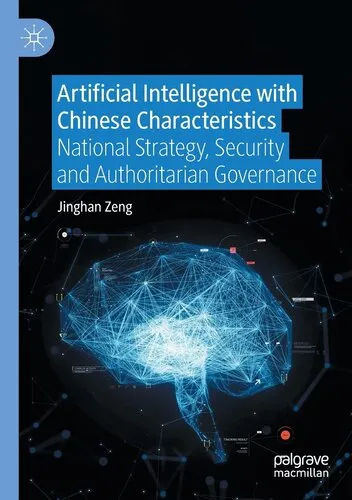
Cover of Artificial Intelligence with Chinese Characteristics: National Strategy, Security and Authoritarian Governance

Book guide and evaluation

Artificial Intelligence with Chinese Characteristics: National Strategy, Security and Authoritarian Governance

Jinghan Zeng

English Beginner Artificial Intelligence (AI)
4.9 / 5

0 reviews

2022

Published

132

pages

326

views

“This book provides the first book-lengthy study focusing on Artificial Intelligence (AI) with Chinese characteristics, in line with China’s open ambition of becoming an AI superpower by 2030. China’s unique domestic politics has developed distinct characteristics for its AI appr

Before you read

What will you get from this book?

“This book provides the first book-lengthy study focusing on Artificial Intelligence (AI) with Chinese characteristics, in line with China’s open ambition of becoming an AI superpower by 2030. China’s unique domestic politics has developed distinct characteristics for its AI approach. By analysing national strategy, security and governance aspects of AI in China, this book argues that China’s AI approach is sophisticated and multifaceted, and it has brought about both considerable benefits and challenges to China.First, many characterize China’s AI approach as a nationally concerted top-down geopolitical strategy to advance Beijing’s unified objective. This book argues that this view is mistaken. It shows that China’s AI politics is largely shaped by economically rather than geopolitically motivated domestic stakeholders. In addition, China’s national AI plan is an upgrade of existing local AI initiatives to the national level, reflecting a bottom-up development. Thus, China’s AI strategy is more of a political manifesto rather than a concrete policy plan.The second part of the book discusses how the Chinese central government has been securitizing AI in order to mobilize local states, market actors, intellectuals and the general public. This security discourse is built on China’s historical anxieties about technology, regime security needs and the growing tension caused by great power competition. Despite its help in convincing domestic actors, however, this securitization trend may undermine key AI objectives.The third part of the book studies the Chinese governance approach to the use of AI. It argues that China’s bold AI practices are part of its broad and incoherent adaptation strategy to governance by digital means. AI is part of a digital technology package that the Chinese authoritarian regime has actively employed not only to improve public services but also to strengthen its authoritarian governance. While China’s AI progress benefits from its unique political and social environment, its ambitious AI plan contains considerable risks. China’s approach is gambling on its success in (a) delivering a booming AI economy, (b) ensuring a smooth social transformation to the age of AI, and (c) proving ideological superiority of its authoritarian and communist values.This book suggests that a more accurate understanding of AI with Chinese characteristics is essential in order to inform the debate regarding what lessons can be learnt from China’s AI approach and how to respond to China’s rise as the AI leader if not superpower.”

Ask this book

Your question is answered in the context of this title and author. Each answer uses 2 points.

Sign in to ask the book assistant.

Reader reviews

0 reviews, 4.9 average out of 5

No reviews yet

If you have read this book, help the next reader with your experience.

Write a review

Sign in to publish a review.

Reader questions and answers

Ask a focused question and learn from the community.

Sign in to ask or answer a question.

No questions yet

Be the first to ask a clear, useful question.