
Book guide and evaluation
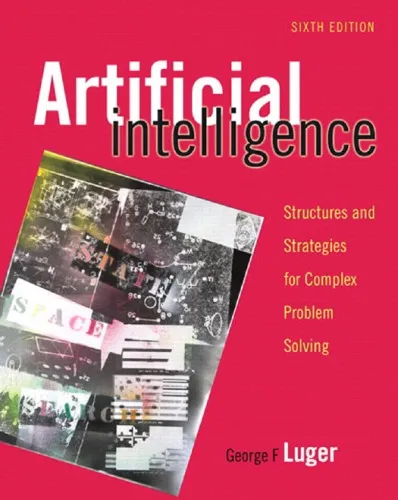
Artificial Intelligence: Structures and Strategies for Complex Problem Solving (5th Edition)
George F. Luger
English
Beginner
Software Engineering
4.7 / 5
0 reviews
2004
Published
928
pages
353
views
Artificial Intelligence: Structures and Strategies for Complex Problem Solving (5th Edition) "Artificial Intelligence: Structures and Strategies for Complex Problem Solving" by George F. Luger is a comprehensive and foundational text that delves deep into the evolving fi
Before you read
What will you get from this book?
Artificial Intelligence: Structures and Strategies for Complex Problem Solving (5th Edition)
"Artificial Intelligence: Structures and Strategies for Complex Problem Solving" by George F. Luger is a comprehensive and foundational text that delves deep into the evolving field of Artificial Intelligence (AI). In its 5th edition, this book serves as both an academic guide and a practical resource for understanding conceptual frameworks, techniques, and strategies that drive the development of intelligent systems. Designed for students, researchers, and industry professionals, this book bridges theoretical principles with real-world applications, providing a structured pathway to grasp the complexities of AI problem-solving domains.
Detailed Summary
The book begins with an insightful exploration of the history and evolution of AI, laying the groundwork for readers to comprehend the multidisciplinary nature of the field. George Luger guides the reader through the core aspects of AI, such as logical reasoning, heuristic search methods, natural language processing, neural networks, expert systems, and robotics. Each chapter is structured to build upon the other, helping readers understand how these components integrate to create intelligent behavior in machines.
A key focus of the text is on problem-solving strategies, ranging from classical algorithms to cutting-edge approaches inspired by cognitive science and biology. The book emphasizes the role of knowledge representation and reasoning, making it easier for readers to grasp how AI systems model their environments.
Unlike many AI texts that focus solely on programming, this book emphasizes deeper conceptual models. These models are supported with detailed pseudocode and illustrative examples. Additionally, Luger explores the challenges and limitations faced in AI development, from computational constraints to ethical dilemmas, making it a nuanced and balanced resource for learners.
Key Takeaways
- Comprehensive introduction to AI principles, techniques, and applications.
- Detailed explanation of knowledge representation and reasoning strategies.
- Focus on heuristic search methods and algorithmic problem-solving approaches.
- Practical examples bridging theory with real-world AI systems.
- Consideration of ethical issues and societal impacts of AI advancements.
- Exploration of emerging areas such as machine learning and robotics.
Famous Quotes from the Book
"Artificial intelligence, at its core, is the endeavor to understand human cognition and replicate it in machines. It sits at the intersection of philosophy, logic, and technology."
"The ultimate goal of AI is not only to solve problems but also to enable machines to evolve with the environment, acquiring knowledge and adapting to change."
Why This Book Matters
The 5th edition of "Artificial Intelligence: Structures and Strategies for Complex Problem Solving" stands out as an essential resource in a rapidly advancing field. Its emphasis on both theoretical depth and practical knowledge ensures it remains relevant for a wide audience. Whether you're an educator introducing AI concepts or a software engineer seeking to understand AI's underlying principles, this book provides a clear, structured, and comprehensive roadmap.
Additionally, Luger's balanced approach to AI ethics, computational limitations, and interdisciplinary methodologies adds a holistic perspective to studying this subject. The concepts presented in this book not only prepare readers for today's landscape of AI development but also position them to contribute to the rapidly evolving innovations of tomorrow.
The book matters because it represents a confluence of history, theory, and application, showcasing AI as more than a technical field—it is a dynamic and transformative discipline that impacts every aspect of human activity. For anyone who seeks to understand the "why" and "how" behind intelligent systems, this text is an invaluable resource.
Ask this book
Your question is answered in the context of this title and author. Each answer uses 2 points.
Sign in to ask the book assistant.
Reader reviews
0 reviews, 4.7 average out of 5
No reviews yet
If you have read this book, help the next reader with your experience.
Write a review
Sign in to publish a review.
Reader questions and answers
Ask a focused question and learn from the community.
Sign in to ask or answer a question.
No questions yet
Be the first to ask a clear, useful question.
What to read next
Related references that continue this learning path.


Modern Computer Vision with PyTorch: A Practical Roadmap From Deep Learning Fundamentals to Advanced Applications and Generative AI, 2nd Edition
V Kishore Ayyadevara,Yeshwanth Reddy
2023
View book