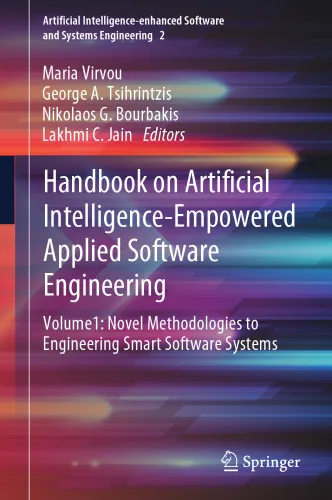
Book guide and evaluation
Artificial Intelligence-enhanced Software and Systems Engineering, 2
Maria Virvou, George A. Tsihrintzis, Nikolaos G. Bourbakis, Lakhmi C. Jain
English
Unordered
Art
4.0 / 5
0 reviews
2022
Published
342
pages
250
views
Artificial Intelligence-enhanced Software and Systems Engineering, 2 Machine learning for software design, Intelligent systems development Discover Artificial Intelligence-enhanced Software and Systems Engineering, 2 — a guide to advanced AI-driven engineering solutions. Ana
Before you read
What will you get from this book?
Analytical Summary
Artificial Intelligence-enhanced Software and Systems Engineering, 2 is a detailed exploration of how artificial intelligence reshapes the processes, methodologies, and performance metrics of modern software and systems engineering. Written by Maria Virvou, George A. Tsihrintzis, Nikolaos G. Bourbakis, and Lakhmi C. Jain, this academic volume provides a rich, research-backed roadmap to integrating AI into complex engineering environments.
This second volume continues the work of its predecessor by expanding scope and introducing advanced topics that reflect the rapid evolution of technology. It examines intelligent algorithms, automated decision-making, adaptive software architectures, and the synergistic relationship between machine learning techniques and system lifecycle management. The authors combine rigorous theoretical frameworks with illustrative case studies, creating a bridge between research concepts and practical implementations.
Structured to benefit academics, industry practitioners, and policymakers alike, the book dissects topics such as AI-driven requirement analysis, intelligent testing tools, autonomous maintenance, and predictive modeling within systems engineering. Each chapter is meticulously referenced, providing readers with access to a rich body of supporting literature. The text maintains a balance between innovation and critical analysis, ensuring that readers grasp both the promises and limitations of AI integration.
Key Takeaways
This work delivers actionable insights on embedding AI directly into software and systems engineering lifecycles, with tangible benefits for quality, efficiency, and adaptability.
Readers will learn how machine learning models can enhance predictive accuracy during system design phases, strengthen risk assessment strategies, and automate code verification routines.
The book showcases the potential of intelligent systems development in addressing scalability challenges, improving human-computer collaboration, and enabling real-time systems optimization. While some advanced applications are still emerging, the authors encourage cautious experimentation backed by empirical data.
Memorable Quotes
“Intelligence is no longer a static property of systems; it is a dynamic capability embedded across the engineering process.”Unknown
“Artificial intelligence in software engineering is about enabling systems to learn, adapt, and evolve alongside user needs.”Unknown
“The convergence of intelligent algorithms and engineering methodologies marks a pivotal point in technological innovation.”Unknown
Why This Book Matters
Artificial Intelligence-enhanced Software and Systems Engineering, 2 holds significance for anyone seeking a deep, evidence-based understanding of how AI transforms technical disciplines.
In a landscape where digital transformation continues to accelerate, this book functions as both a scholarly resource and a technical guide. It equips readers with conceptual clarity and practical tools for applying AI-enhanced methodologies throughout the system development lifecycle. This dual focus makes it suitable for graduate courses, professional training programs, and in-house engineering team development.
The authors remain transparent about the limitations of current AI tools and the need for ethical considerations in engineering AI-enabled systems. By promoting responsible innovation, they empower practitioners to harness AI’s full potential while mitigating risks.
Inspiring Conclusion
Artificial Intelligence-enhanced Software and Systems Engineering, 2 stands as a pivotal contribution to our understanding of AI’s role in transforming engineering disciplines.
By investing time in studying this comprehensive work, readers position themselves at the forefront of innovation, capable of leveraging intelligent systems development for strategic advantage. Whether your interest lies in advancing academic research, enhancing professional practice, or collaborating on groundbreaking projects, this book provides both the intellectual foundation and the practical insights required.
The authors invite you to engage actively: read deeply, share this knowledge with peers, and discuss the challenges and opportunities that AI brings to modern engineering. Your next step could be to integrate one of the methodologies presented into your next project, paving the way for more adaptive, efficient, and intelligent systems.
Ask this book
Your question is answered in the context of this title and author. Each answer uses 2 points.
Sign in to ask the book assistant.
Reader reviews
0 reviews, 4.0 average out of 5
No reviews yet
If you have read this book, help the next reader with your experience.
Write a review
Sign in to publish a review.
Reader questions and answers
Ask a focused question and learn from the community.
Sign in to ask or answer a question.
No questions yet
Be the first to ask a clear, useful question.
What to read next
Related references that continue this learning path.
Site Reliability Engineering: How Google Runs Production Systems
Betsy Beyer,Chris Jones,Jennifer Petoff,Niall Richard Murphy
2016
View book