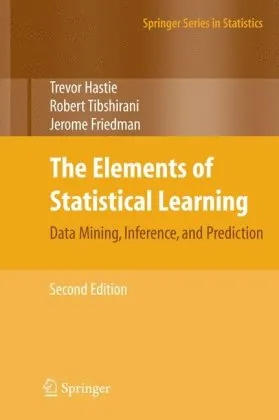
The elements of statistical learning: Data mining, inference, and prediction
Trevor Hastie,Robert Tibshirani,Jerome Friedman
2009
View book
RefHub featured
Book guide and evaluation
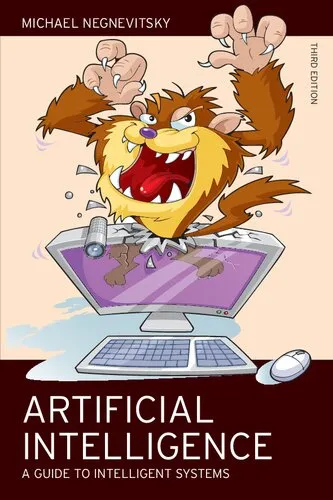
Michael Negnevitsky
0 reviews
Published
pages
views
Welcome to the captivating world of Artificial Intelligence (AI) with the third edition of "Artificial Intelligence: A Guide to Intelligent Systems." This book serves as a comprehensive entry point for enthusiasts, students, and professionals who are eager to understa
Before you read
Welcome to the captivating world of Artificial Intelligence (AI) with the third edition of "Artificial Intelligence: A Guide to Intelligent Systems." This book serves as a comprehensive entry point for enthusiasts, students, and professionals who are eager to understand the principles underpinning intelligent systems. Written by Michael Negnevitsky, this edition incorporates the latest developments in AI, offering readers both theoretical insights and practical applications that demystify the complexity of AI technologies.
The third edition of "Artificial Intelligence: A Guide to Intelligent Systems" is structured to cater to a diverse audience, ranging from novices to seasoned practitioners. It begins with foundational concepts, exploring the evolution of AI and introducing key areas like knowledge representation, machine learning, natural language processing, and expert systems. With a well-rounded exploration, the book delves into advanced topics such as neural networks, genetic algorithms, and fuzzy logic, elucidating their roles in developing cutting-edge intelligent systems.
What sets this edition apart is its hands-on approach. It integrates real-world case studies, examples, and exercises designed to build intuition and skills in AI applications. The book balances theoretical underpinnings with practical insights, ensuring that readers develop a robust understanding of both the potential and limitations of AI technologies.
- Gain a solid foundation in AI principles and methodologies, suitable for both beginners and experienced practitioners.
- Understand the workings and applications of various AI techniques, including machine learning, expert systems, and neural networks.
- Explore the ethical considerations and societal impacts of AI, preparing readers to engage thoughtfully in discussions about the role of technology.
- Benefit from practical exercises that enhance learning and provide hands-on experience with AI tools and technologies.
"An intelligent system isn't just about algorithms—it's about understanding the problems those algorithms solve."
"In the realm of AI, learning never stops, because our environments continually change and evolve."
"The quest for intelligence is not just about creating machines that can think, but about machines that can understand."
"Artificial Intelligence: A Guide to Intelligent Systems" is more relevant than ever as AI continues to reshape industries and influence daily life. By elucidating complex concepts in accessible terms, this book empowers readers to grasp the transformative potential of AI. Its focus on practical applications bridges the gap between theoretical knowledge and real-world deployment, making it an invaluable resource for anyone looking to harness AI technologies effectively.
This edition is particularly significant in its effort to address the ethical dimensions of AI. In a world where AI's influence grows unabated, understanding its societal implications is crucial. The book equips readers to critically assess these issues, fostering a generation of practitioners who are as thoughtful as they are skilled.
As you embark on this journey through the fascinating landscapes of artificial intelligence, "Artificial Intelligence: A Guide to Intelligent Systems" promises to be both your companion and guide. It invites you to not just witness but actively participate in the unfolding story of AI, arming you with the knowledge and tools to contribute meaningfully to this dynamic field.
Your question is answered in the context of this title and author. Each answer uses 2 points.
0 reviews, 4.0 average out of 5
Sign in to publish a review.
Ask a focused question and learn from the community.
Related references that continue this learning path.
Trevor Hastie,Robert Tibshirani,Jerome Friedman
Giancarlo Zaccone,Md. Rezaul Karim,Ahmed Menshawy