Book guide and evaluation
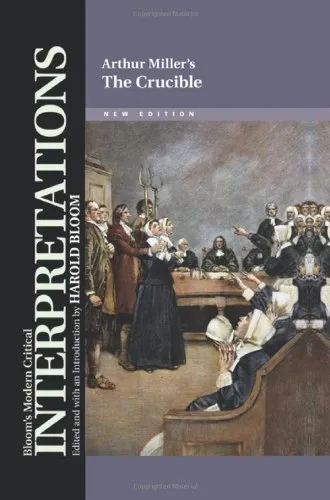
Arthur Miller's The Crucible (Bloom's Modern Critical Interpretations)
Harold Bloom
English
Intermediate
novel
4.5 / 5
0 reviews
2008
Published
241
pages
568
views
Introduction to Arthur Miller's The Crucible: A Bloom's Modern Critical Interpretation Arthur Miller's "The Crucible" remains a powerful and relevant piece of American literature, examining themes of hysteria, reputation, and integrity. This modern critical interpretation
Before you read
What will you get from this book?
Introduction to Arthur Miller's The Crucible: A Bloom's Modern Critical Interpretation
Arthur Miller's "The Crucible" remains a powerful and relevant piece of American literature, examining themes of hysteria, reputation, and integrity. This modern critical interpretation aims to delve deeper into the nuances of the play, offering a comprehensive guide to understanding its timeless relevance and significance in both literary and historical contexts.
Detailed Summary of the Book
Published in 1953, "The Crucible" is a dramatized and partially fictionalized account of the Salem witch trials that took place in the Massachusetts Bay Colony during 1692–93. Arthur Miller wrote the play as an allegory for McCarthyism, when the U.S. government blacklisted accused communists. The play explores themes of collective hysteria and the destructive power of false accusations. Set in a theocratic Puritan society, the narrative unfolds in a community gripped by the fear of witchcraft. The protagonist, John Proctor, becomes entangled in the chaotic accusations and trials that ensue, challenging his moral compass and questioning his own integrity. The play examines how individuals can become complicit in a society fueled by paranoia and the repercussions of protecting one's reputation at the cost of others' lives.
Key Takeaways
- The dangers of mass hysteria and its ability to destroy communities.
- The importance of personal integrity and moral courage.
- Critique of authoritarianism and the impact of ideology on justice.
- The intricate dynamics between reputation, power, and social structure.
Famous Quotes from the Book
Miller's "The Crucible" is filled with memorable lines that echo the core themes of the play. Here are a few significant quotes:
"Because it is my name! Because I cannot have another in my life! Because I lie and sign myself to lies!"
"We are only what we always were, but naked now."
"You have made your magic now, for now I do think I see some shred of goodness in John Proctor."
Why This Book Matters
"The Crucible" serves as an enduring reminder of the perils of mob mentality and the importance of integrity. Arthur Miller's compelling narrative and rich characterizations make the play a staple in American literature and its themes resonate across time and borders. In periods of political and social turmoil, "The Crucible" provides insight into human behavior and the consequences of failing to question authority and injustice. The play's critique of authoritarian practices is especially relevant in contemporary discussions about civil liberties and freedom of thought. As such, "The Crucible" is a significant work not only as a historical allegory but also as a study in the resilience of the human spirit in the face of oppression.
Ask this book
Your question is answered in the context of this title and author. Each answer uses 2 points.
Sign in to ask the book assistant.
Reader reviews
0 reviews, 4.5 average out of 5
No reviews yet
If you have read this book, help the next reader with your experience.
Write a review
Sign in to publish a review.
Reader questions and answers
Ask a focused question and learn from the community.
Sign in to ask or answer a question.
No questions yet
Be the first to ask a clear, useful question.
What to read next
Related references that continue this learning path.