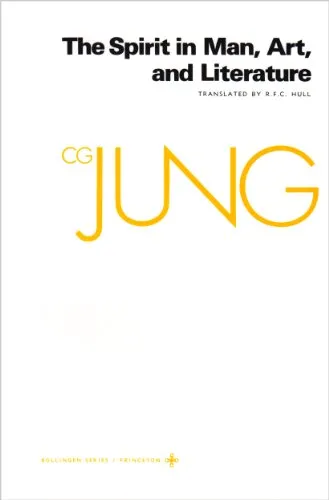
The spirit in man, art, and literature
Jung, Carl Gustav;Freud, Sigmund;Jung, Carl Gustav
1971
View book
Book guide and evaluation
Mury Rabin
0 reviews
Published
pages
views
Art therapy and eating disorders: the self as significant form art therapy for eating disorders, creative self-expression in mental health Explore 'Art therapy and eating disorders: the self as significant form' and its insights into creative healing and personal identi
Before you read
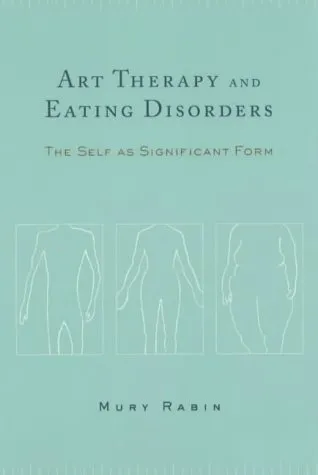
Art therapy and eating disorders: the self as significant form is an in-depth exploration of the transformative role that artistic processes play in the treatment and understanding of eating disorders. Written for academics, clinicians, and thoughtful readers, the text engages with the complex interplay between psychological patterns, self-representation, and the healing potential of creative modalities.
This book situates art therapy within contemporary clinical practice, offering a nuanced examination of how visual expression can bridge verbal gaps in psychotherapy. It recognizes that eating disorders often involve struggles with identity, embodiment, and self-worth, and contends that art-making provides a window into the underlying narratives that shape these experiences.
Through detailed case studies and theoretical discussion, the work explores how symbolic forms and imagery reveal dimensions of the self that verbal exchange may fail to capture. Information about the precise publication year is unavailable due to no reliable public source, but its content remains timeless in its relevance to therapeutic contexts.
Readers will gain a comprehensive understanding of how art therapy can be applied to support recovery from eating disorders and how the concept of the “self as significant form” enriches conventional treatment paradigms.
First, the book elucidates how creative expression can externalize internal conflicts, making them tangible and malleable in therapeutic space. Second, it outlines the theoretical foundations that support integrating art therapy alongside other psychotherapeutic methods. Third, it underscores the importance of the therapist’s role in interpreting and responding to visual narratives. Fourth, it provides rich visual and textual analyses that illustrate the process of identity reconstruction. Lastly, it encourages further academic discourse around interdisciplinary approaches to mental health care.
"Art allows the unspeakable to find form, and in that form, the self can be seen anew." Unknown
"Recovery is as much about reclaiming your image of yourself as it is about changing behaviors." Unknown
"The canvas becomes a mirror, reflecting what is often invisible in spoken conversation." Unknown
This book holds significance for scholars, therapists, and anyone interested in the intersection of creativity and mental health because it bridges the experiential with the analytical.
Art therapy and eating disorders: the self as significant form advances the discourse on non-verbal therapeutic interventions, emphasizing how art can serve both diagnostic and restorative purposes. For professionals in psychology and psychiatry, it provides an additional lens through which patient narratives can be understood. For art therapists, it offers validation and depth, affirming the value of their work in a clinical setting. The concepts here invite dialogue and collaboration across disciplines.
Art therapy and eating disorders: the self as significant form challenges readers to reimagine recovery and therapeutic engagement as deeply creative acts.
By presenting the self as “significant form,” the book reframes personal identity not as a static concept, but as an evolving visual and emotional narrative shaped through art. Whether you are a clinician seeking new methods, a student of psychology, or an individual on a healing journey, these pages offer tools and insights to enrich understanding and practice.
Now is the time to explore this approach: read it, share its ideas with colleagues, and discuss how art therapy can transform lives affected by eating disorders. In doing so, you become part of a growing movement advocating for the integration of creativity into mental health care.
Your question is answered in the context of this title and author. Each answer uses 2 points.
0 reviews, 4.4 average out of 5
Sign in to publish a review.
Ask a focused question and learn from the community.
Related references that continue this learning path.
Jung, Carl Gustav;Freud, Sigmund;Jung, Carl Gustav