Book guide and evaluation
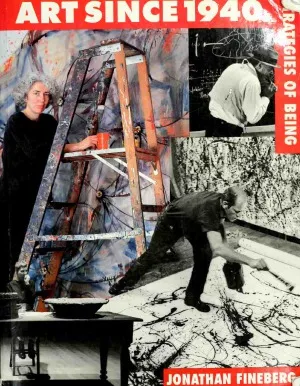
Art Since 1940 - Strategies of Being
Jonathan Fineberg
English
Beginner
Art History
4.5 / 5
0 reviews
1995
Published
498
pages
506
views
Welcome to the comprehensive guide to understanding the evolution of modern art as captured in 'Art Since 1940 - Strategies of Being' by Jonathan Fineberg. This book explores the profound transformations in art from the onset of the 1940s to recent times, offering an insightf
Before you read
What will you get from this book?
Welcome to the comprehensive guide to understanding the evolution of modern art as captured in 'Art Since 1940 - Strategies of Being' by Jonathan Fineberg. This book explores the profound transformations in art from the onset of the 1940s to recent times, offering an insightful analysis into how art reflects broader cultural, political, and technological changes.
Detailed Summary of the Book
The book 'Art Since 1940 - Strategies of Being' provides a sequential overview of the significant art movements and figures that have shaped the world of contemporary art over the decades. It delves into the motivations and conceptual strategies that artists adopted to respond to an ever-evolving world.
Fineberg meticulously maps out the revolution of abstract expressionism, examining how artists like Jackson Pollock and Willem de Kooning broke away from traditional forms to express the complexities of the human condition during the mid-20th century. The book also covers the rise of pop art, led by influential icons like Andy Warhol and Roy Lichtenstein, who used satire and irony to critique consumerism and mass media.
Through chapters dedicated to movements such as Minimalism, Conceptual Art, and Neo-Expressionism, Fineberg provides readers with a holistic view of how each new wave of art challenges and builds upon previous ideas. Importantly, the narrative considers global perspectives on art, transcending Western-centric frameworks to include influential figures from Asia, Africa, and Latin America.
Key Takeaways
- The evolution of art is intrinsically linked to historical and socio-political contexts.
- Art is both a reflective and proactive practice that comments on, and sometimes predicts, societal shifts.
- Modern art movements often coexist, overlap, and interact creating dynamic dialogues between different artistic approaches.
- The role of the artist has evolved from being a creator of aesthetic objects to a conceptual thinker and communicator.
Famous Quotes from the Book
"Art is not a mirror to reflect reality, but a hammer with which to shape it."
"The triumph of modern art is its ability to adapt, reflect, and redefine the complexities of the age."
Why This Book Matters
'Art Since 1940 - Strategies of Being' is vital for anyone seeking to understand not just the history of modern art, but the various ways art interacts with the broader human experience. Fineberg's work is instrumental in illustrating how art both shapes and is shaped by the times, making it a crucial read for both students and enthusiasts of art history.
The book transcends mere historical documentation by providing a philosophical lens through which readers can examine the intent, implications, and impact of modern artistic practices. Through careful analysis, Fineberg encourages readers to consider the ongoing conversations around identity, power, economics, and technology that influence artists and their work.
As such, 'Art Since 1940 - Strategies of Being' remains an indispensable resource for comprehending the strategies artists use to navigate and interpret their ever-complex environments.
Ask this book
Your question is answered in the context of this title and author. Each answer uses 2 points.
Sign in to ask the book assistant.
Reader reviews
0 reviews, 4.5 average out of 5
No reviews yet
If you have read this book, help the next reader with your experience.
Write a review
Sign in to publish a review.
Reader questions and answers
Ask a focused question and learn from the community.
Sign in to ask or answer a question.
No questions yet
Be the first to ask a clear, useful question.
What to read next
Related references that continue this learning path.