The White Coat Investor: A Doctor's Guide To Personal Finance And Investing
James M Dahle MD
2014
View book
Book guide and evaluation
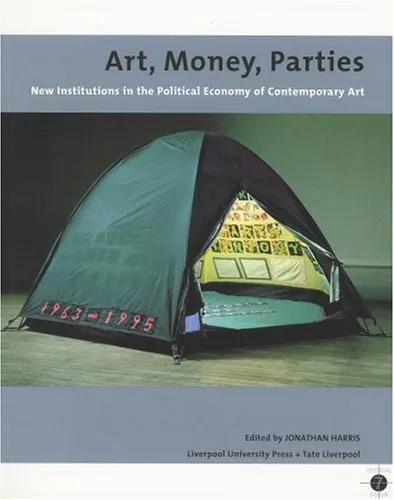
Edited by Jonathan Harris
0 reviews
Published
pages
views
Welcome to the world of contemporary art, where the lines between creativity, commerce, and community are constantly evolving. The book 'Art, Money, Parties: New Institutions in the Political Economy of Contemporary Art' offers a deep dive into the intricate web of relationsh
Before you read
Welcome to the world of contemporary art, where the lines between creativity, commerce, and community are constantly evolving. The book 'Art, Money, Parties: New Institutions in the Political Economy of Contemporary Art' offers a deep dive into the intricate web of relationships that define the modern art world. Edited by Jonathan Harris, this work is an essential resource for understanding how new structures and economies are reshaping artistic landscapes.
Art, at its core, has always been a reflection of society, but in recent decades, the role of economic and institutional factors has grown exponentially. This book explores how financial imperatives are increasingly intertwined with artistic expression. Through a collection of essays, it delves into the influence of money on art production, distribution, and reception. The text examines different facets of contemporary art institutions, from galleries and auction houses to public art programs and biennales, exploring how they navigate the pressures of commerce while striving to maintain artistic integrity.
The book also addresses the emergence of new art markets and the globalization of the art economy, highlighting the challenges and opportunities these changes present. It scrutinizes the ways in which art is commodified and questions the impact this has on creativity and critical engagement.
Here are some thought-provoking excerpts that capture the essence of the book:
"Art may be free in spirit, but it is undeniably influenced by the invisible hand of the market."
"Institutions shape art, but it is art that shapes institutions in a continuous dance of power and perspective."
This book is crucial for anyone interested in understanding the contemporary art world, both from a practitioner's and an observer's perspective. It provides a nuanced discourse on how economic mechanisms interact with creative processes, offering insights that are essential for artists, curators, investors, and academics alike. As art becomes increasingly globalized, the questions raised by this book about authenticity, value, and the future role of art in society become ever more relevant.
More than just a critique, the book is an invitation to rethink how we engage with art and how institutions can evolve to support artistic diversity and accessibility in the modern age. It challenges readers to consider how art can thrive in an economy-driven world while retaining its transformative power.
Your question is answered in the context of this title and author. Each answer uses 2 points.
0 reviews, 4.5 average out of 5
Sign in to publish a review.
Ask a focused question and learn from the community.
Related references that continue this learning path.
James M Dahle MD

Richards,Carl