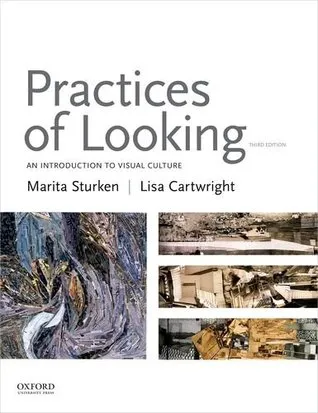
Practices of Looking: An Introduction to Visual Culture
Marita Sturken;Lisa Cartwright
2017
View book
Book guide and evaluation
John R. Clarke
0 reviews
Published
pages
views
Welcome to an exploration of Roman art through the eyes of those often left out of historical narratives: the ordinary citizens of ancient Rome. "Art in the Lives of Ordinary Romans: Visual Representation and Non-Elite Viewers in Italy, 100 B.C.-A.D. 315" by John R. Clarke is
Before you read
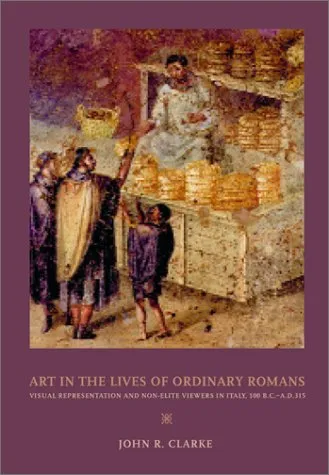
Welcome to an exploration of Roman art through the eyes of those often left out of historical narratives: the ordinary citizens of ancient Rome. "Art in the Lives of Ordinary Romans: Visual Representation and Non-Elite Viewers in Italy, 100 B.C.-A.D. 315" by John R. Clarke is a compelling examination of how visual culture influenced and reflected the lives of non-elite individuals in Italian society.
The book provides a comprehensive analysis of the visual culture that permeated the daily lives of the Roman populace from 100 B.C. to A.D. 315, focusing on non-elite individuals. John R. Clarke delves into the art and artifacts found within homes, public spaces, and funerary settings, offering insights into the values, aspirations, and identities of ordinary Roman people. By classifying and interpreting various forms of visual representations like frescoes, sculptures, and mosaics, Clarke reveals the ubiquitous presence of art in these environments and the roles it played in shaping social identity and cultural norms. This work not only unravels artistic expressions available to the masses but also situates them within the broader spectrum of Roman society's visual and cultural dynamics.
"The art of the ordinary is not merely a reflection of its time but a statement of human resilience and aspiration in the face of societal limits."
"Visual culture in ancient Rome was not a privilege afforded only to the elite. It pervaded markets, baths, and common dwellings, asserting its vitality in the shared spaces of life."
Clarke’s "Art in the Lives of Ordinary Romans" significantly contributes to our understanding of Roman culture by shifting the focus from monumental art and architecture typically associated with emperors and aristocrats to the everyday art forms of the majority populace. This revisionist perspective imbues Roman history with a more nuanced complexity, where ordinary people are active participants and consumers of cultural expressions. As scholarly discourse increasingly embraces social history's themes, Clarke’s work offers a foundation for further inquiry into how non-elites contributed to the artistic and cultural fabric of their societies.
The book stands as an essential resource for both classical scholars and casual enthusiasts of Roman history, bridging gaps between archaeological findings and ethnographic interpretations. Clarke’s meticulous research presents a balanced view that champions the cultural endeavors of the ordinary Roman, providing insights that both enrich the historical record and challenge conventional narratives.
Your question is answered in the context of this title and author. Each answer uses 2 points.
0 reviews, 4.5 average out of 5
Sign in to publish a review.
Ask a focused question and learn from the community.
Related references that continue this learning path.
Marita Sturken;Lisa Cartwright