

Jab, Jab, Jab, Right Hook: How to Tell Your Story in a Noisy Social World
Gary Vaynerchuk
2013
View book
Book guide and evaluation
Abdelfattah Kilito;Mbarek Sryfi, Eric Sellin (trans.)
0 reviews
Published
pages
views
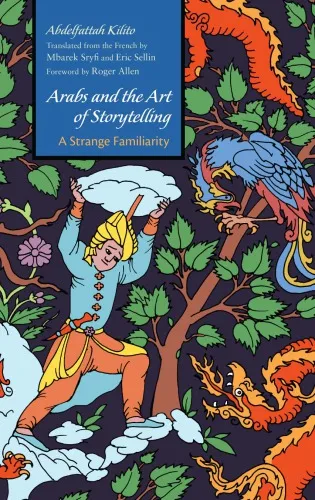
Introduction to Arabs and the Art of Storytelling: A Strange Familiarity Abdelfattah Kilito's Arabs and the Art of Storytelling: A Strange Familiarity, masterfully translated by Mbarek Sryfi and Eric Sellin, is a fascinating journey into the heart of Arabic liter
Before you read
Abdelfattah Kilito's Arabs and the Art of Storytelling: A Strange Familiarity, masterfully translated by Mbarek Sryfi and Eric Sellin, is a fascinating journey into the heart of Arabic literature, oral traditions, and the timeless essence of storytelling. This book is much more than a historical or scholarly exploration—it is a thought-provoking meditation on the cultural and intellectual traditions that shaped the Arab world through the art of narrative. Kilito intricately analyzes storytelling as both a creative act and a medium for the transmission of cultural knowledge. Through a fresh lens, he examines classical Arabic texts, the interplay of oral and written traditions, and how stories transform across time, space, and audience.
The book's title aptly hints at a paradox: how something as ancient, intimate, and inherently local as Arabic storytelling can resonate universally. In this detailed introduction, you’ll discover a comprehensive summary of the book, key takeaways for readers, famous quotes that encapsulate Kilito's insights, and reasons why this book is significant for both readers of Arabic literature and enthusiasts of storytelling across cultures.
At its core, Arabs and the Art of Storytelling delves into how storytelling has shaped and been shaped by Arab culture. Kilito draws heavily from canonical works such as The Thousand and One Nights, as well as other classical texts, to explore the tension between written and oral traditions. He investigates the role of the narrator, not just as a conveyor of stories but as a symbol of authority, wisdom, and cultural memory. These narrators, whether Shahrazad or a wandering bard, are portrayed as indispensable mediators of truth, fiction, and morality.
Kilito also pays close attention to the aesthetics of storytelling, probing the structural and thematic features of Arabic narratives. He demonstrates how repetition, parallelism, and rhetorical flourishes are not mere embellishments but essential tools that engage audiences and anchor stories within cultural memory. Furthermore, the book examines the broader cultural implications of storytelling: how Arabic narratives navigate themes of identity, exile, governance, and cosmic justice.
Ultimately, Kilito situates storytelling within a broader philosophical framework, questioning the role of the storyteller in society, the tension between spoken and written words, and the ways in which stories reflect the aspirations and anxieties of their audiences.
"The storyteller has one essential task: to preserve the ambiguity of life through the clarity of narrative."
"Reality in storytelling exists not as a mere reflection but as a negotiation between imagination and memory."
"Shahrazad survives not through wit alone, but by reinventing the world she describes, one story at a time."
In an age where global storytelling often prioritizes Western traditions and narratives, Arabs and the Art of Storytelling is a vital contribution to understanding the rich and diverse tradition of Arabic literature. Kilito’s work highlights the complexity and sophistication of Arab storytelling traditions, challenging stereotypes and inviting readers to engage with these stories on their own terms.
This book is essential not only for scholars of Arabic literature but also for anyone intrigued by the universal power of stories. Kilito bridges the gap between academic rigor and accessible prose, making the work appealing to a wide audience. It invites readers to reflect on how stories shape their understanding of the world and encourages them to see storytelling as a dynamic and transformative cultural force.
In summary, Arabs and the Art of Storytelling reminds us that stories are not only entertainment but also tools for survival, connection, and meaning. It is a testament to the enduring relevance of the art of storytelling in understanding both the self and the other.
Your question is answered in the context of this title and author. Each answer uses 2 points.
0 reviews, 4.5 average out of 5
Sign in to publish a review.
Ask a focused question and learn from the community.
Related references that continue this learning path.
Gary Vaynerchuk



Philip J. Davis,Reuben Hersh,Elena Anne Marchisotto (auth.)