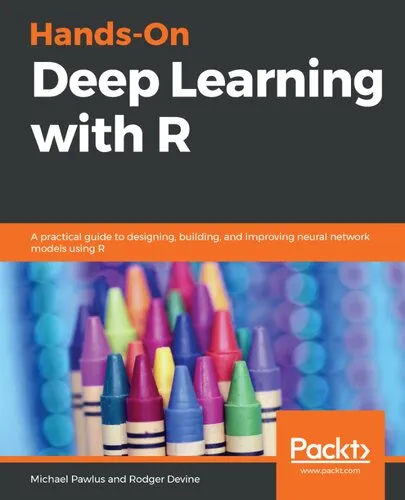
Hands-On Deep Learning with R: A practical guide to designing, building, and improving neural network models using R
Michael Pawlus,Rodger Devine
2020
View book
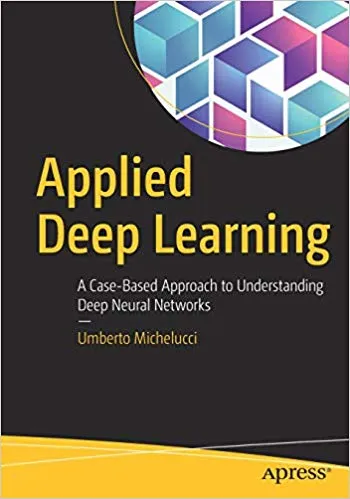
Book guide and evaluation
Umberto Michelucci
0 reviews
Published
pages
views
Introduction to 'Applied Deep Learning: A Case-Based Approach to Understanding Deep Neural Networks' Welcome to 'Applied Deep Learning: A Case-Based Approach to Understanding Deep Neural Networks', a book that bridges the gap between theoretical foundations and r
Before you read
Welcome to 'Applied Deep Learning: A Case-Based Approach to Understanding Deep Neural Networks', a book that bridges the gap between theoretical foundations and real-world applications of deep learning. Authored with the intent to guide both beginners and practitioners, this book offers a comprehensive case-based approach to mastering deep neural networks. By focusing on practical examples, step-by-step implementations, and real-world context, the book equips readers to not only understand the concepts but also apply them across diverse domains.
Understanding deep learning can often feel overwhelming due to its intricate mathematics and complex frameworks. This book simplifies those challenges through a structured approach, blending hands-on examples with essential theoretical explanations. Whether you're a developer seeking to incorporate neural networks into your projects or a curious learner eager to dive into AI, this book is designed to empower you with both knowledge and actionable skills.
This book focuses on a case-based methodology to teach deep learning, ensuring clarity and relevance to modern AI challenges.
The content is meticulously structured to guide readers from the basics of neural networks to their advanced applications. It begins with foundational concepts, such as perceptrons and backpropagation, and gradually moves to state-of-the-art architectures like convolutional and recurrent networks. Central to this approach is the practical aspect: every concept is paired with a real-world use case, ensuring that readers not only comprehend the topic but are also able to implement it.
Chapters delve into critical areas of deep learning, including data preprocessing, neural network design, hyperparameter tuning, and model evaluation. Special attention is given to teaching readers how to address overfitting, optimize training, and deploy models in production environments. Ultimately, the book culminates in advanced concepts like transfer learning, generative models, and ethical implications of AI—ensuring you're prepared for both current and future challenges in the deep learning space.
These takeaways don't just enrich your understanding but also enable you to confidently apply deep learning to real-world problems, from computer vision to natural language processing and beyond.
"Deep learning is not just about making machines intelligent—it’s about empowering humanity to solve problems we never dared to approach before."
"The journey from data to insights is not magical; it’s engineered, iterated, and refined."
"When we teach machines to think, it’s equally important to consider how we think about the machines."
In a world where AI is reshaping industries and influencing virtually all aspects of our lives, understanding the science behind it is more important than ever.
Unlike many books that veer too deep into either theory or code, 'Applied Deep Learning' strikes a meticulous balance by emphasizing both understanding and implementation. It demystifies concepts that are often deemed too technical, enabling a broader audience to participate in the AI revolution. By focusing on application-oriented learning, the book ensures that readers are not merely consumers of AI but active contributors to its evolution.
The case-based methodology, coupled with a focus on ethical considerations, prepares readers to use deep learning responsibly and effectively. This is not just a guide to mastering a tool—it's a roadmap to understanding a transformative force in technology. Whether you're looking to advance your career, make informed decisions, or simply stay ahead of the curve, this book is your gateway to deep learning.
Your question is answered in the context of this title and author. Each answer uses 2 points.
0 reviews, 4.5 average out of 5
Sign in to publish a review.
Ask a focused question and learn from the community.
Related references that continue this learning path.
Michael Pawlus,Rodger Devine
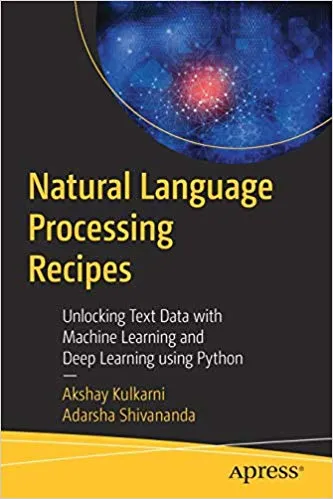
Akshay Kulkarni,Adarsha Shivananda