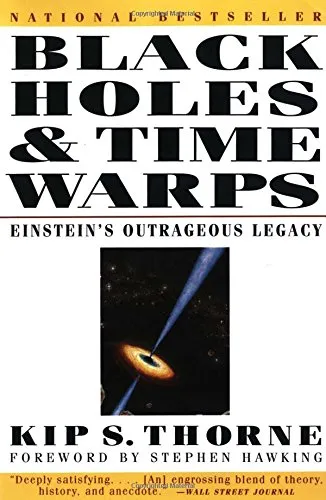
Black Holes and Time Warps: Einstein’s Outrageous Legacy
Kip S. Thorne,Stephen Hawking
1995
View book
Book guide and evaluation
Launius,Roger D
0 reviews
Published
pages
views
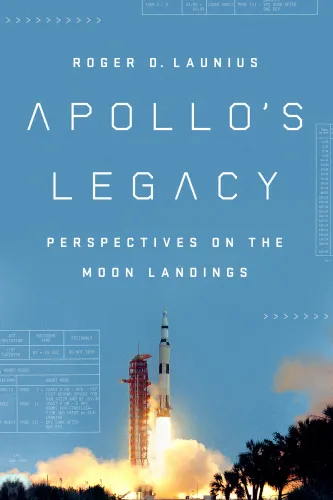
Introduction to "Apollo's Legacy: Perspectives on the Moon Landings" The Apollo Moon landings represent one of the most extraordinary achievements in human history. "Apollo's Legacy: Perspectives on the Moon Landings," written by Roger D. Launius, dives deeply into the cultura
Before you read
The Apollo Moon landings represent one of the most extraordinary achievements in human history. "Apollo's Legacy: Perspectives on the Moon Landings," written by Roger D. Launius, dives deeply into the cultural, political, and scientific significance of these iconic missions. This exploration goes beyond the technical accomplishments of space exploration to examine the long-term implications, myths, and stories that have emerged decades after these remarkable events.
The book not only revisits the grandiose human odyssey of sending astronauts to another celestial body but also challenges its readers to think critically about its relevance in today's world. It provides an essential lens through which we can analyze the technological advancements, the intricate geopolitical race during the Cold War, and the public perception of space exploration as a whole. This is not a simple recounting of the Apollo story; instead, it is a sophisticated discussion of the program's enduring impact across different domains, providing readers with an understanding of why Apollo continues to matter.
In "Apollo's Legacy," Roger D. Launius brings his extensive background as a space historian to break down the multifaceted effects of the Apollo program. The book is structured to explore the ways Apollo has influenced various aspects of society, politics, and culture since the 1960s. Below are the key sections that summarize the book in greater detail:
Launius also examines the legacy of Apollo in shaping discussions about future space exploration. By reflecting on the triumphs and limitations of Apollo, the book raises key questions about humanity's continued push toward the Moon and other destinations in space. It delves deeply into topics such as why we haven't returned to the Moon in decades and whether the societal appetite for such monumental missions still exists.
The book provides profound insights into the past, present, and future of space exploration. Here are some of the primary lessons readers can derive from "Apollo's Legacy":
Roger D. Launius masterfully uses words to capture the essence of Apollo's significance. Here are a few memorable quotes from the book:
"Apollo was, at its core, a product of its time—a creation of a unique alignment of technical, political, and cultural forces that proved historically unrepeatable."
"For all its monumental achievements, Apollo also raises profound questions about costs, value, and the very essence of exploration."
"The Moon remains etched in human history not only because of what was achieved technically, but because of the hope it instilled for a better future."
"Apollo's Legacy: Perspectives on the Moon Landings" is more than just a history book. It is an examination of one of humanity's most ambitious undertakings and a thoughtful analysis of its far-reaching implications. At a time when plans for returning to the Moon or even reaching Mars are being reignited, this book offers critical context for understanding how the Apollo program shaped our collective imagination.
Launius's perspective is invaluable for historians, enthusiasts of space exploration, and policymakers alike. By weaving together facts and cultural analysis, the book equips readers with the knowledge to appreciate past achievements while critically assessing the future. It serves as a bridge between history and aspiration, urging us to remember why exploring beyond our planet matters—not just to scientists but to society as a whole.
No matter where you stand on the practicalities of space travel, "Apollo's Legacy" underscores the unrelenting human desire to push boundaries, innovate, and explore the unknown, making it a must-read for anyone interested in space, science, and history.
Your question is answered in the context of this title and author. Each answer uses 2 points.
0 reviews, 4.3 average out of 5
Sign in to publish a review.
Ask a focused question and learn from the community.
Related references that continue this learning path.
Kip S. Thorne,Stephen Hawking