
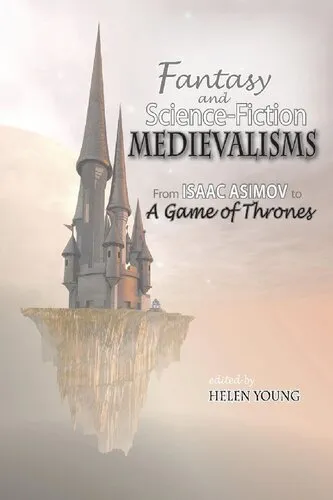
Fantasy and Science Fiction Medievalisms: From Isaac Asimov to A Game of Thrones
Helen Young (editor)
2015
View book

Book guide and evaluation
Mary Taylor Huber
0 reviews
Published
pages
views
Introduction to "Anthropology & Humanismpp.92—94" "Anthropology & Humanismpp.92—94" is a thought-provoking exploration of the intersection between the foundational concepts of anthropology and their connection to humanism. Authored by Mary Taylor Huber, this book provi
Before you read
"Anthropology & Humanismpp.92—94" is a thought-provoking exploration of the intersection between the foundational concepts of anthropology and their connection to humanism. Authored by Mary Taylor Huber, this book provides a critical lens through which readers can understand the deeper relationship between cultural study and the intricacies of humanity itself. The sections covered within pages 92 to 94 particularly delve into themes of empathy, self-reflection, and the moral obligations of anthropologists to honor diverse human experiences.
The beauty of this work lies in its ability to balance scholarly rigor with a deep sense of humane understanding. It invites readers into difficult yet essential conversations about ethics, humanity, and the transformative potential of shared understanding. Whether you are a seasoned anthropologist, an academic exploring humanism, or simply a curious reader, Huber's work offers fresh perspectives and timeless wisdom.
At its core, "Anthropology & Humanismpp.92—94" investigates how anthropology extends beyond the realms of research and scientific observation to become a mode of understanding the human condition. The author emphasizes the importance of adopting a humanistic approach in anthropological practices, one that prioritizes empathy, participation, and respect for diverse worldviews. Huber skillfully critiques the historical methods of "objectivity" while arguing for a more ethically engaged practice that acknowledges cultural differences without imposing external values.
Pages 92 to 94 specifically highlight the moral dilemmas and ethical quandaries faced by anthropologists as they embed themselves in the lives of those they study. Reflecting on real-world case studies, Huber raises poignant questions about representation, misinterpretation, and the power imbalances between researchers and their subjects. These chapters beckon readers to reimagine the discipline of anthropology as a deeply collaborative and reflexive process that values human dignity and embraces the messiness of lived experiences.
Here are a few memorable lines from the book that encapsulate its profound themes:
"To be human is not simply to observe but to feel with, to share the joys and sorrows of others as if they were our own."
"Anthropology is an act of courage—an acknowledgment that the world’s richness lies in its diversity, not in the sum of our preconceptions."
"True understanding begins where judgment ends—when we dare to leave behind the safety of our assumptions and embrace the unfamiliar."
In an age where cultural misunderstandings and divisions often dominate global headlines, "Anthropology & Humanismpp.92—94" serves as a much-needed reminder of the value of empathy, curiosity, and engagement with others. It challenges readers to move beyond merely "studying" cultures and instead practice active listening and authentic connection. The book offers invaluable insights for those working in fields related to cross-cultural communication, social justice, and ethics—making it a must-read not only for anthropologists but for anyone who seeks to better understand the human experience in a globalized world.
Mary Taylor Huber's work stands as a beacon of the transformative power of humanistic anthropology. It is a call to action for all of us to embrace cultural differences, foster mutual understanding, and navigate the complexities of human behavior with compassion and respect. At its heart, this book is a manifesto for living and learning in a way that cherishes humanity’s vast and beautiful diversity.
Your question is answered in the context of this title and author. Each answer uses 2 points.
0 reviews, 3.8 average out of 5
Sign in to publish a review.
Ask a focused question and learn from the community.
Related references that continue this learning path.
Helen Young (editor)
Gregory Bateson;Rodney E. Donaldson

Cisneros, Sandra;House on Mango Street;Herrera-Sobek, María