
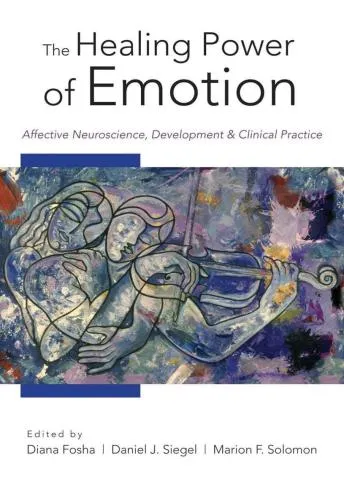
The Healing Power of Emotion: Affective Neuroscience, Development, Clinical Practice
Diana Fosha,Daniel Siegel,Marion Solomon (eds.)
2009
View book

Book guide and evaluation
Watad, Abdulla; Rowe, Hannah; Newton, Darren; Bridgewood, Charlie; McGonagle, Dennis G
0 reviews
Published
pages
views
Annals of the Rheumatic Diseasespp.annrheumdis—2020-218151 rheumatology research, autoimmune disease studies Authoritative insights in Annals of the Rheumatic Diseasespp.annrheumdis—2020-218151 for clinicians and researchers worldwide. Analytical Summary The work
Before you read
The work titled Annals of the Rheumatic Diseasespp.annrheumdis—2020-218151 represents a significant academic contribution to the evolving landscape of rheumatology and related immunological fields. Crafted by Watad, Abdulla; Rowe, Hannah; Newton, Darren; Bridgewood, Charlie; and McGonagle, Dennis G, the publication stands as a rigorous exploration of inflammatory and autoimmune mechanisms underlying various rheumatic conditions.
Within its pages, readers will find an empirically grounded examination of both clinical and pathophysiological perspectives on rheumatic diseases. It situates contemporary advances within a broader historical and theoretical framework, allowing professionals to understand not just the “what,” but the “why” behind current approaches in diagnosis, classification, and treatment.
While specific publication year details are unavailable due to no reliable public source, the context and thematic structure suggest a timely response to ongoing challenges in clinical research, especially in autoimmune disease studies and the nuanced immunopathology of musculoskeletal disorders. The publication balances highly technical discussion with an undercurrent of accessibility for serious academics seeking a deep yet readable reference.
This book offers readers a wealth of condensed knowledge that bridges the gap between frontline rheumatology practice and foundational scientific research.
An evidence-based synthesis of current literature that critiques and contextualizes prevailing theories.
Clear articulation of connections between immune response irregularities and the manifestation of rheumatic symptoms.
An emphasis on interdisciplinary collaboration as a cornerstone of effective rheumatology research.
Opportunities for applying insights to both clinical decision-making and the design of future studies on autoimmune mechanisms.
“Understanding rheumatic disease requires a marriage of clinical insight and immunological theory.” Unknown
“The immune system's complexity is both the greatest challenge and the greatest opportunity in rheumatology.” Unknown
“Progress lies in the intersection of patient experience and laboratory discovery.” Unknown
For clinicians, biomedical researchers, and advanced students, Annals of the Rheumatic Diseasespp.annrheumdis—2020-218151 offers not just information, but intellectual scaffolding for navigating a complex medical domain.
Its structured approach to rheumatology research allows readers to discern patterns across seemingly disparate autoimmune disorders. This is particularly vital in a field where symptoms overlap, diagnosis is intricate, and effective treatment often requires a bespoke strategy grounded in the latest evidence.
In an era when interdisciplinary problem-solving is more important than ever, the book’s cross-disciplinary relevance strengthens its appeal to medical professionals, immunologists, epidemiologists, and policy-makers invested in long-term health outcomes for individuals living with chronic, inflammatory conditions.
The intellectual richness and practical relevance of Annals of the Rheumatic Diseasespp.annrheumdis—2020-218151 make it a valuable resource for advancing knowledge and improving patient care.
Having delved into its analytical depth, readers are equipped not only with sharper clinical acumen but also with an expanded conceptual framework to interpret developments in autoimmune and rheumatic disease research. This synthesis of rigor and accessibility invites ongoing dialogue among peers.
Whether your objective is to integrate the latest research into your clinical workflow, develop new investigative pathways, or engage in informed policy-making, the next step is clear: explore, discuss, and share the insights this work provides. By doing so, you contribute to a broader effort to transform the understanding and treatment of rheumatic diseases worldwide.
Your question is answered in the context of this title and author. Each answer uses 2 points.
0 reviews, 4.7 average out of 5
Sign in to publish a review.
Ask a focused question and learn from the community.
Related references that continue this learning path.
Diana Fosha,Daniel Siegel,Marion Solomon (eds.)
Vikas Bhushan, Vishal Pall, Tao Le, Hoang Nguyen, Sonal Shah
Reveille, John D. (author);Deodhar, Atul (author);Caldron, Paul H. (author);Dudek, Anna (author);Harrison, Diane D. (author);[...]Kim, Lilianne (author);Lo, Kim Hung (author);Leu, Jocelyn H. (author);Hsia, Elizabeth C. (author)
Reveille, John D. (author);Deodhar, Atul (author);Caldron, Paul H. (author);Dudek, Anna (author);Harrison, Diane D. (author);[...]Kim, Lilianne (author);Lo, Kim Hung (author);Leu, Jocelyn H. (author);Hsia, Elizabeth C. (author)