Book guide and evaluation
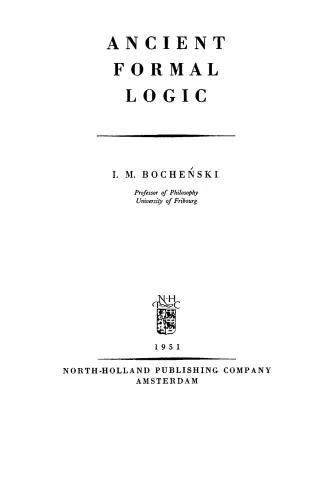
Ancient Formal Logic
Innocentius Marie Bochenski
English
Beginner
Logic and Foundations
4.5 / 5
0 reviews
0
Published
128
pages
471
views
Introduction to Ancient Formal Logic Explore the fascinating world of logic as conceived by ancient philosophers. Ancient Formal Logic delves into the roots of logical thinking, offering readers a deep insight into how early logical systems were structured and their enduri
Before you read
What will you get from this book?
Introduction to Ancient Formal Logic
Explore the fascinating world of logic as conceived by ancient philosophers. Ancient Formal Logic delves into the roots of logical thinking, offering readers a deep insight into how early logical systems were structured and their enduring influence on contemporary thought.
Detailed Summary
In Ancient Formal Logic, we embark on a journey through the evolution of logical systems from their nascent stages in the ancient world. The book meticulously traces the development of formal logic, beginning with the vivid intellectual endeavors of the Greeks. Readers will gain an understanding of how logic first took a structured form and how seminal philosophers like Aristotle, Zeno, and Chrysippus contributed foundational principles. The narrative progresses through the complex terrains of logical syllogisms, propositions, and paradoxes that puzzled and provoked ancient thinkers.
The text also explores the lesser-known contributions of non-Greek traditions, acknowledging the influence of Indian and Chinese logicians. By examining the interactions among different cultures, the book highlights a more global appreciation of ancient logic. The last chapters review the synthesis of these ancient ideas during the medieval period, emphasizing how they laid the groundwork for modern logic.
Key Takeaways
- The core structures of logic used today are deeply rooted in ancient philosophical traditions.
- An understanding of ancient logic principles enhances one's comprehension of modern logical frameworks.
- There is valuable wisdom in exploring non-Western logic traditions, which have significantly enriched the tapestry of logical thought.
- Logical and philosophical puzzles endured over centuries because they touch upon universal truths and queries about human reasoning.
Famous Quotes from the Book
“Logic is the architecture of thoughts, and ancient minds were the first to draw its plans.”
“To understand modern logic, one must kneel before the ancient thinkers and listen.”
“The paradoxes of antiquity remain victorious over thousands of years, challenging and refining our intellect.”
Why This Book Matters
In a world inundated with information, the ability to reason and think logically is more crucial than ever. Ancient Formal Logic is not just a retrospective of bygone philosophical treatises but an essential guide to understanding the bedrock of logical thought. Modern education often overlooks the profound impact ancient traditions have had on current methodologies, and this book seeks to fill that void by reintroducing readers to these timeless concepts.
This work is significant because it invites both laymen and scholars to reflect on how ancient logic systems inform today’s reasoning processes, problem-solving techniques, and ethical considerations. It bridges the historical gap, demonstrating that while technology and society have transformed, the principles guiding rationality have endured.
Whether you are a student of philosophy, a historian of ideas, or simply a curious mind eager to grasp the roots of logical thought, Ancient Formal Logic furnishes you with a profound comprehension of the past, thereby enriching your insight into the future of logic and philosophy.
Ask this book
Your question is answered in the context of this title and author. Each answer uses 2 points.
Sign in to ask the book assistant.
Reader reviews
0 reviews, 4.5 average out of 5
No reviews yet
If you have read this book, help the next reader with your experience.
Write a review
Sign in to publish a review.
Reader questions and answers
Ask a focused question and learn from the community.
Sign in to ask or answer a question.
No questions yet
Be the first to ask a clear, useful question.
What to read next
Related references that continue this learning path.
The conflicts of modernity in Ludwig Wittgenstein's Tractatus Logico-Philosophicus
Dobrzeniecki,Marek
2016
View book