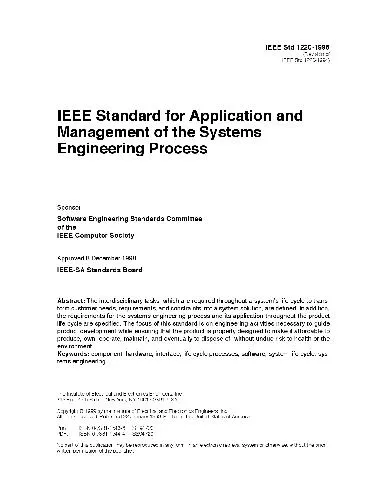
IEEE Trial Use Standard for Application and Management of the Systems Engineering Process (IEEE Std 1220
Software Engineering Standards Committee of the IEEE Computer SociCODE: OS
1994
View book
Book guide and evaluation
Gang Feng
0 reviews
Published
pages
views
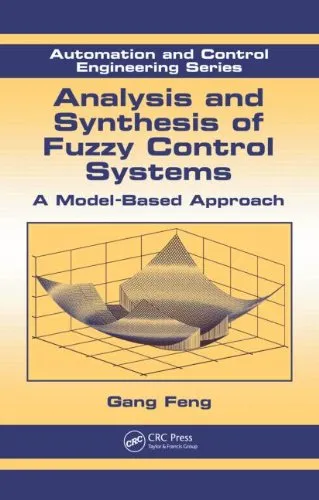
Introduction to 'Analysis and Synthesis of Fuzzy Control Systems: A Model-Based Approach' Welcome to the fascinating world of fuzzy control systems. This book offers a comprehensive exploration of fuzzy control design and analysis from a model-based perspective, merging theore
Before you read
Welcome to the fascinating world of fuzzy control systems. This book offers a comprehensive exploration of fuzzy control design and analysis from a model-based perspective, merging theoretical insights with practical applications.
Fuzzy control systems are one of the core components in the field of automation and control engineering, known for their ability to handle uncertainty and imprecision. In 'Analysis and Synthesis of Fuzzy Control Systems: A Model-Based Approach', we delve into both traditional and cutting-edge techniques for the systematic modeling, design, analysis, and implementation of these systems.
Structured across multiple chapters, the book begins with fundamental concepts, introducing readers to the core principles of fuzzy logic and its application in control systems. As the chapters progress, the book shifts focus to model-based methodologies, providing a detailed account of various analytical tools and synthesis techniques. Readers will explore advanced topics such as stability analysis, parameter tuning, and the integration of fuzzy controllers with robust and optimal control strategies.
The interplay between practical engineering needs and advanced theoretical developments is a recurring theme throughout the text, providing professionals and researchers with the tools they need to address real-world challenges efficiently. The book is replete with examples, illustrations, and case studies that illuminate key concepts and demonstrate the applicability of fuzzy control systems across different domains.
Comprehensive understanding of fuzzy logic and control systems from a model-based perspective.
In-depth exploration of various design and synthesis techniques for fuzzy controllers.
Clear guidelines on stability analysis and performance evaluation of fuzzy control systems.
Practical insights through case studies bridging theory with applications.
“In the realm of control systems, fuzziness is not an adversary to precision; rather, it is a testament to our understanding of complex, real-world dynamics.”
“The ability to model uncertainty is not only advantageous but essential in modern control engineering, and fuzzy logic is at the heart of this paradigm.”
The importance of this book lies in its ability to bridge the gap between theory and practice in the field of fuzzy control systems. Given the rapid advancement in automated technologies and the growing complexity of problems engineers face, there is a critical need for advanced, reliable models that can cope with uncertainty. This book equips practitioners and researchers with the knowledge and tools to design robust and efficient fuzzy control systems.
Moreover, the book serves as a rich resource for educators and students, offering a deep dive into the principles of fuzzy logic and control, complemented by a multitude of examples that facilitate learning and retention. By presenting a model-based approach, it lays the groundwork for future innovations and advancements in control engineering, making it a valuable addition to the library of any serious practitioner or scholar in the field.
Your question is answered in the context of this title and author. Each answer uses 2 points.
0 reviews, 4.5 average out of 5
Sign in to publish a review.
Ask a focused question and learn from the community.
Related references that continue this learning path.
Software Engineering Standards Committee of the IEEE Computer SociCODE: OS