
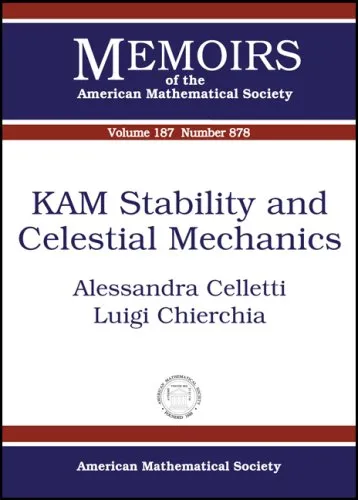

Book guide and evaluation
An Introductory Treatise On Dynamical Astronomy
Henry C. Plummer
English
Beginner
Art
4.0 / 5
0 reviews
2010
Published
365
pages
363
views
Introduction to "An Introductory Treatise On Dynamical Astronomy" "An Introductory Treatise On Dynamical Astronomy" by Henry C. Plummer is a profound exploration of the fundamental principles underpinning the celestial mechanics that govern our universe. This book offers
Before you read
What will you get from this book?
Introduction to "An Introductory Treatise On Dynamical Astronomy"
"An Introductory Treatise On Dynamical Astronomy" by Henry C. Plummer is a profound exploration of the fundamental principles underpinning the celestial mechanics that govern our universe. This book offers a careful, in-depth treatment of the mathematical and physical concepts necessary to study the motion of celestial bodies, presenting it in a structured and accessible manner. Though it primarily caters to students and researchers of astronomy and astrophysics, its lucid explanations make it appealing even to scientifically curious readers who wish to grasp the intricacies of dynamical astronomy.
Detailed Summary of the Book
The book delves into the essential aspects of dynamical astronomy, which forms the foundation of understanding the gravitational interactions that dictate celestial mechanics. It opens with an overview of basic principles, such as Newton's laws of motion and the gravitational law, and proceeds to cover a wide range of topics including orbits, perturbations, and the stability of dynamical systems.
One notable feature of this treatise is its emphasis on the application of mathematical tools for analyzing real-world astronomical phenomena. Equations of motion, conservation laws, and methods for solving differential equations form the backbone of the text, enabling readers to build a concrete understanding of how theory translates into observations of planetary motion, comet paths, and star trajectories.
Later chapters provide significant coverage of advanced topics, such as the three-body problem, restricted and general orbital configurations, and the study of resonances. Despite its rigorous mathematical treatment, the book remains attuned to the physical intuition behind the ideas, ensuring that the information is digestible for those with a foundational knowledge of classical mechanics and calculus.
Key Takeaways
- The principles of celestial mechanics are deeply rooted in Newtonian mechanics and gravitational theory.
- Mathematical tools such as differential equations and conservation laws play an essential role in analyzing celestial phenomena.
- Key challenges in astronomy, such as the three-body problem, require innovative approaches and approximations for practical solutions.
- The motion of celestial bodies, from planets to comets, can be explained and predicted using a combination of mathematics and physics.
- Understanding dynamical astronomy is critical for advancements in astrophysics, space exploration, and cosmological research.
Famous Quotes from the Book
"The motions of celestial bodies, though governed by immutable laws, contain within them the complexity and beauty that have inspired humanity to look towards the heavens for understanding."
"The study of dynamics in astronomy thrives at the intersection of precision mathematics and the boundless curiosity to chart the unknown vastness of space."
Why This Book Matters
"An Introductory Treatise On Dynamical Astronomy" remains a cornerstone text in the field of astronomy and astrophysics. By integrating mathematical rigor with physical intuition, it serves as a bridge for readers aspiring to transition from basic astronomical concepts to an advanced understanding of celestial mechanics.
This book is not only a source of knowledge but also an inspiration to pursue the timeless quest of decoding the universe's mysteries. It provides insights that are essential not just for professional astronomers but also for physicists, mathematicians, and engineers working in fields like satellite design, orbital mechanics, and even space exploration.
In a world where space exploration is becoming more relevant than ever, Plummer's work imparts the theoretical foundations necessary to design missions, predict orbital paths, and understand the intricate dance of celestial objects in the cosmos. Combining pedagogical clarity with scientific depth, this treatise has stood the test of time as an invaluable resource for scientific inquiry.
Ask this book
Your question is answered in the context of this title and author. Each answer uses 2 points.
Sign in to ask the book assistant.
Reader reviews
0 reviews, 4.0 average out of 5
No reviews yet
If you have read this book, help the next reader with your experience.
Write a review
Sign in to publish a review.
Reader questions and answers
Ask a focused question and learn from the community.
Sign in to ask or answer a question.
No questions yet
Be the first to ask a clear, useful question.
What to read next
Related references that continue this learning path.
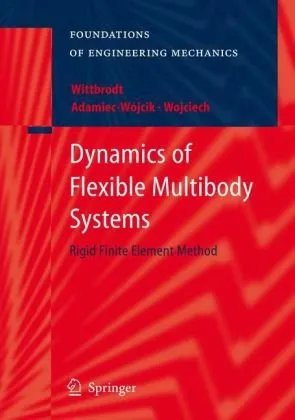
Dynamics of Flexible Multibody Systems: Rigid Finite Element Method (Foundations of Engineering Mechanics)
Edmund Wittbrodt,Iwona Adamiec-Wójcik,Stanislaw Wojciech
2006
View book

Dynamic Behavior of Materials, Volume 1: Proceedings of the 2011 Annual Conference on Experimental and Applied Mechanics
Mark Foster,Paul Moy,Randy Mrozek,Joe Lenhart (auth.),Tom Proulx (eds.)
2011
View book