Book guide and evaluation
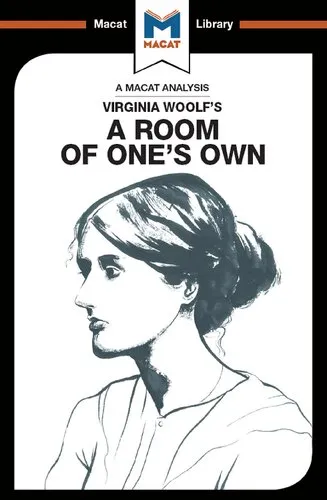
An Analysis of Virginia Woolf's A Room of One's Own
Tim Smith-Laing,Fiona Robinson
English
Beginner
writing
4.5 / 5
0 reviews
2017
Published
96
pages
588
views
Introduction to An Analysis of Virginia Woolf's A Room of One's Own Virginia Woolf's seminal work, "A Room of One's Own," stands as a cornerstone in feminist literature and an enduring piece of literary criticism. In our book, "An Analysis of Virginia Woolf's A Roo
Before you read
What will you get from this book?
Introduction to An Analysis of Virginia Woolf's A Room of One's Own
Virginia Woolf's seminal work, "A Room of One's Own," stands as a cornerstone in feminist literature and an enduring piece of literary criticism. In our book, "An Analysis of Virginia Woolf's A Room of One's Own," we delve deeply into Woolf's pioneering view of the socio-economic and educational restrictions placed upon women and their influence on women's ability to produce literature. This detailed exploration provides readers with a comprehensive understanding of Woolf's arguments, the historical context in which she wrote, and the enduring relevance of her work.
Detailed Summary of the Book
Our analysis begins by providing a thorough summary of Woolf's essay. Originally delivered as a series of lectures at Newnham and Girton Colleges, "A Room of One's Own" addresses the lack of educational and financial resources available to women and posits that this absence has stifled their literary potential. Woolf famously suggests that “a woman must have money and a room of her own if she is to write fiction.” Through a combination of narrative fiction and historical analysis, she examines the fate of women's creative opportunities by hypothesizing about what might have been, had women been afforded the same opportunities as men throughout history.
Our book traces these arguments, carefully mapping the evolution of Woolf's thoughts as she navigates a landscape dominated by male writers and the institutional barriers erected by a patriarchal society. We explore the fictional character of Shakespeare's sister, a methodological device Woolf uses to illustrate the tragic loss of female voices due to oppressive societal norms. This summary provides readers with a grasp of Woolf's rhetorical strategies and the fictional components that enhance her arguments.
Key Takeaways
- The importance of financial independence and private space in fostering creative work.
- The socio-economic and educational inequalities between men and women and their impact on literature.
- The necessity of revisiting historical narratives to include female perspectives.
- The usage of fiction to illustrate social critiques effectively.
Famous Quotes from the Book
"A woman must have money and a room of her own if she is to write fiction."
"Women have served all these centuries as looking-glasses possessing the magic and delicious power of reflecting the figure of man at twice its natural size."
Why This Book Matters
Our analysis of Woolf's "A Room of One's Own" sheds light on the continued relevance of her arguments in today's context. As various fields continue to grapple with gender inequality and strive for more inclusive representations, Woolf's insights offer both a historical perspective and a template for ongoing conversations about gender and creativity. By exploring our book, readers gain a richer understanding of Woolf's arguments and how they can be applied to current societal structures. Woolf’s reflections on gender and authorship challenge readers to think critically about the systems that limit creative expression and provide a foundational text for feminist discourse and literary criticism.
Ask this book
Your question is answered in the context of this title and author. Each answer uses 2 points.
Sign in to ask the book assistant.
Reader reviews
0 reviews, 4.5 average out of 5
No reviews yet
If you have read this book, help the next reader with your experience.
Write a review
Sign in to publish a review.
Reader questions and answers
Ask a focused question and learn from the community.
Sign in to ask or answer a question.
No questions yet
Be the first to ask a clear, useful question.
What to read next
Related references that continue this learning path.