
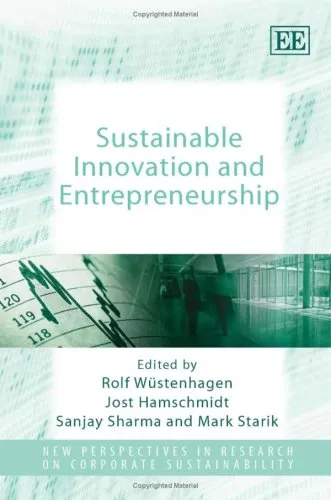
Sustainable Innovation and Entrepreneurship
Rolf Wustenhagen,Jost Hamschmidt,Sanjay Sharma,Mark Starik
2008
View book

Book guide and evaluation
Peter Gevorkian
0 reviews
Published
pages
views
Introduction to "Alternative Energy Systems in Building Design" "Alternative Energy Systems in Building Design" by Peter Gevorkian serves as an essential guide for architects, engineers, and sustainability enthusiasts who seek to integrate renewable energy solutions into moder
Before you read
"Alternative Energy Systems in Building Design" by Peter Gevorkian serves as an essential guide for architects, engineers, and sustainability enthusiasts who seek to integrate renewable energy solutions into modern building practices. This book delves deep into the principles, technologies, and methodologies for designing energy-efficient buildings powered by alternative energy systems such as solar, wind, and geothermal energy.
As the world embraces a future defined by sustainability, this book provides both theoretical insights and practical guidance necessary to bridge the gap between conventional building design and environmentally responsible solutions. It emphasizes how building professionals can reduce carbon emissions and dependency on fossil fuels while enhancing energy efficiency, operational cost savings, and long-term resilience in the built environment.
The comprehensive content of "Alternative Energy Systems in Building Design" ensures that it stands out as a cornerstone resource for sustainable design professionals.
The book begins by introducing the fundamentals of alternative energy and exploring why renewable energy systems are critical in the fight against climate change. It examines a wide array of technologies, including photovoltaic systems, solar thermal energy, wind power, hydropower, geothermal systems, and energy storage solutions. The author methodically explains the engineering principles behind each technology while providing practical design strategies for integrating them into buildings.
Beyond the technical aspects, the book delves into economic and policy considerations. It discusses the financial benefits of renewable energy systems, cost estimation practices, and government incentives aimed at promoting energy efficiency and sustainability. Additionally, chapters on advanced topics such as power optimization, energy audits, and electricity grid connections make this book a comprehensive guide for energy-conscious professionals.
From residential to commercial and industrial applications, the book provides real-world case studies, illustrating how renewable energy systems can be successfully implemented in various scenarios. These examples offer inspiration and tangible insights for readers, helping them envision how sustainable technologies might be adopted in their own projects.
"Alternative Energy Systems in Building Design" leaves readers with a powerful set of insights and practical knowledge for real-world application.
Here are some notable quotes that capture the essence of the book and its message:
"The future of our planet rests on our ability to step away from the nonrenewable past and embrace the alternative energy systems of tomorrow."
"Sustainability is no longer a luxury, but a necessity for ensuring the longevity of our built environment and the well-being of future generations."
"Buildings are not just structures; they are living systems that can thrive on renewable energy if intelligently designed."
The significance of "Alternative Energy Systems in Building Design" cannot be overstated. It stands at the intersection of sustainable architecture and cutting-edge technology, providing critical knowledge at a time when climate change is a pressing global concern.
By educating readers on ways to harness alternative energy sources efficiently, the book directly contributes to the broader goal of global carbon reduction. Its focus on bridging traditional building practices with modern energy innovations makes it a valuable tool for industry professionals and students alike. In a world increasingly defined by energy constraints and environmental challenges, the lessons presented in this book are not just relevant—they are indispensable.
Through its methodical analysis and forward-looking vision, the book fosters a culture of sustainable innovation in the building design industry. It empowers the next generation of designers, engineers, and policymakers to create a greener, cleaner, and more energy-resilient future for all.
Your question is answered in the context of this title and author. Each answer uses 2 points.
0 reviews, 4.5 average out of 5
Sign in to publish a review.
Ask a focused question and learn from the community.
Related references that continue this learning path.
Rolf Wustenhagen,Jost Hamschmidt,Sanjay Sharma,Mark Starik
Donald G Reinertsen

Shigeo Shingo,Andrew P. Dillon