Book guide and evaluation
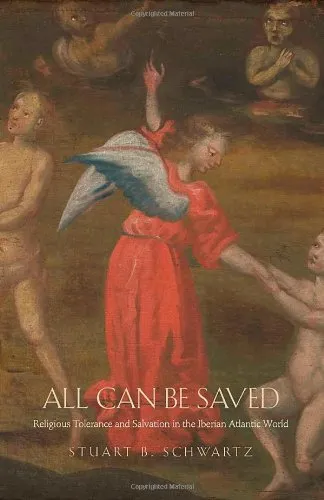
All Can Be Saved: Religious Tolerance and Salvation in the Iberian Atlantic World
Stuart B. Schwartz
English
Intermediate
novel
4.5 / 5
0 reviews
2008
Published
351
pages
441
views
Introduction to "All Can Be Saved: Religious Tolerance and Salvation in the Iberian Atlantic World" The book "All Can Be Saved: Religious Tolerance and Salvation in the Iberian Atlantic World" by Stuart B. Schwartz is a groundbreaking exploration of religious tolerance during
Before you read
What will you get from this book?
Introduction to "All Can Be Saved: Religious Tolerance and Salvation in the Iberian Atlantic World"
The book "All Can Be Saved: Religious Tolerance and Salvation in the Iberian Atlantic World" by Stuart B. Schwartz is a groundbreaking exploration of religious tolerance during the early modern period, specifically focusing on the Iberian Atlantic world. This scholarly work sheds light on the often-overlooked instances of religious tolerance that existed alongside the more infamous religious persecutions of this era. By drawing on a vast array of historical sources, including inquisitorial records, personal letters, and religious texts, Schwartz reveals a complex tapestry of beliefs that challenged the rigid orthodoxy imposed during the age of exploration and colonization.
Detailed Summary of the Book
The book is structured around a series of case studies that illustrate the diverse attitudes towards religious difference in the Iberian Atlantic world. Schwartz investigates how common people, from farmers to fishermen, navigated the turbulent seas of religious strife. His analysis highlights the voices of those who believed in the possibility of salvation beyond the confines of Catholic dogma. For many of these individuals, tolerance was not merely a pragmatic stance but a deeply held belief that all souls could find salvation, regardless of their religious affiliations.
The narrative delves into the specific contexts of Spain, Portugal, and their respective colonies. It intricately outlines how these regions' unique social and political climates fostered different degrees of tolerance. Schwartz emphasizes that this tolerance was not monolithic but varied greatly by location and era, influenced by local circumstances and the interplay of power between church and state.
Key Takeaways
- Religious tolerance in the Iberian Atlantic world was more common than traditional narratives suggest, with many individuals advocating for broader acceptance of diverse beliefs.
- Grassroots movements and personal beliefs often clashed with the official stances of religious and secular authorities, forming a more nuanced historical landscape.
- The idea that "All Can Be Saved" reflects not only theological debates but also social and political pressures influencing conceptions of salvation and community.
- Explores the impact of colonization on religious practices and beliefs, highlighting how new cultural intersections fostered dialogue and conflict.
Famous Quotes from the Book
"The pursuit of a uniform faith did not drown out all voices of dissent. Instead, it catalyzed a spectrum of beliefs that dared to envision a more inclusive path to salvation."
"Understanding history is not merely about acknowledging events but recognizing the discourse of diverse voices that contributed to the fabric of society."
Why This Book Matters
This book is a pivotal contribution to the field of religious studies and early modern history. By bringing to light the often-neglected stories of tolerance, Schwartz invites readers to reconsider the dominant narratives of religious persecution. His work not only enriches our understanding of the past but also offers valuable insights into contemporary discussions on religious coexistence.
In a world where religious intolerance remains a pressing issue, "All Can Be Saved" provides historical context for how societies have previously managed, and sometimes thrived, on religious diversity. It underscores the potential for a historical appreciation of tolerance to inform our current and future approaches to multicultural and multi-faith societies.
Ask this book
Your question is answered in the context of this title and author. Each answer uses 2 points.
Sign in to ask the book assistant.
Reader reviews
0 reviews, 4.5 average out of 5
No reviews yet
If you have read this book, help the next reader with your experience.
Write a review
Sign in to publish a review.
Reader questions and answers
Ask a focused question and learn from the community.
Sign in to ask or answer a question.
No questions yet
Be the first to ask a clear, useful question.
What to read next
Related references that continue this learning path.