
Book guide and evaluation
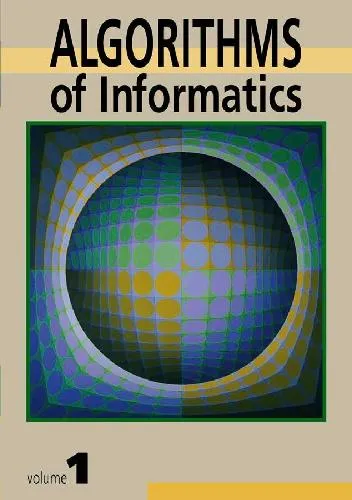
Algorithms of informatics. Foundations
Ivanyi A. (ed.)
English
Beginner
Art
4.3 / 5
0 reviews
2007
Published
579
pages
249
views
Introduction Welcome to "Algorithms of Informatics: Foundations", a comprehensive exploration of the theoretical and practical underpinnings of algorithm design and analysis. This book is crafted for learners, educators, and professionals who wish to develop a profound und
Before you read
What will you get from this book?
Introduction
Welcome to "Algorithms of Informatics: Foundations", a comprehensive exploration of the theoretical and practical underpinnings of algorithm design and analysis. This book is crafted for learners, educators, and professionals who wish to develop a profound understanding of algorithms, one of the cornerstones of informatics. Structured with clarity and precision, this work covers the essential principles of computational thinking, mathematical rigor, and problem-solving strategies that are crucial for tackling both foundational and advanced algorithmic challenges.
In the rapidly evolving field of informatics, algorithms are the essential tools that drive the development of software, optimize systems, and solve complex real-world problems. Whether you are preparing for competitive programming, pursuing a career in computer science, or delving deep into academic research, this book is designed to solidify your grasp of algorithms at their core. Through a seamless integration of definitions, illustrations, and practical applications, "Algorithms of Informatics: Foundations" makes theoretical concepts accessible and actionable.
Detailed Summary of the Book
The book is divided into meticulously crafted chapters that collectively build a deep understanding of algorithmic principles, starting from the basics and gradually advancing toward more complex topics.
The initial chapters introduce readers to the fundamentals of algorithms—what they are, why they matter, and how they are used. Core topics include computational complexity, algorithmic paradigms such as divide-and-conquer and dynamic programming, and the mathematical foundations that underlie algorithm design. The book carefully demonstrates how algorithms can be analyzed both theoretically and empirically, offering detailed insights into time and space complexity.
As the book progresses, readers are introduced to data structures like stacks, queues, trees, and graphs, along with how these structures are leveraged to develop efficient algorithms for sorting, searching, and optimization. Special attention is given to graph algorithms, a cornerstone of computer science, covering breadth-first search (BFS), depth-first search (DFS), shortest path algorithms, and spanning trees.
Alongside the theoretical aspects, the book also delves into practical problem-solving techniques and strategies, outlining how to approach problems logically and systematically. Advanced topics such as NP-completeness, approximation algorithms, and randomized algorithms are presented with clarity, making even the most challenging concepts comprehensible.
By the end of the book, readers will have gained the tools to not only understand existing algorithms but also design innovative solutions to novel problems.
Key Takeaways
- A clear understanding of fundamental algorithmic concepts.
- An introduction to mathematical tools like induction, recurrence relations, and graph theory.
- Mastery of common algorithmic paradigms such as greedy algorithms, divide-and-conquer, and dynamic programming.
- Comprehensive exposure to graph algorithms and their applications.
- The ability to analyze the efficiency of algorithms and assess their real-world applicability.
- An overview of advanced topics like computational complexity and randomized algorithms.
Famous Quotes from the Book
"Algorithms are the tools we use to transform abstract ideas into functional solutions."
"Understanding an algorithm is not just about knowing how it works, but also about appreciating why it works."
"The study of algorithms is the study of efficiency; it is the pursuit of doing more with less."
Why This Book Matters
In an era where technology permeates every aspect of our lives, understanding the fundamentals of algorithms is more essential than ever before. Algorithms form the backbone of computational systems, enabling innovations in areas ranging from artificial intelligence to big data, and from healthcare optimization to financial modeling. A solid grasp of algorithms not only enhances one’s problem-solving ability but also provides a competitive edge in academia and industry.
"Algorithms of Informatics: Foundations" bridges the gap between theory and practice, offering readers a balanced approach to learning. It equips learners with both the theoretical knowledge required for academic excellence and the practical tools needed to succeed in the professional world. Moreover, this book fosters a mindset of logical thinking, creativity, and precision—skills that extend far beyond the boundaries of computer science.
Whether you are a student, an educator, or an industry professional, this book is an invaluable resource that will guide you in your journey to mastering algorithms and tackling real-world problems effectively. Its carefully structured content and accessible language ensure that the knowledge it imparts remains relevant and impactful for years to come.
Ask this book
Your question is answered in the context of this title and author. Each answer uses 2 points.
Sign in to ask the book assistant.
Reader reviews
0 reviews, 4.3 average out of 5
No reviews yet
If you have read this book, help the next reader with your experience.
Write a review
Sign in to publish a review.
Reader questions and answers
Ask a focused question and learn from the community.
Sign in to ask or answer a question.
No questions yet
Be the first to ask a clear, useful question.
What to read next
Related references that continue this learning path.

Modern Computer Vision with PyTorch: A Practical Roadmap From Deep Learning Fundamentals to Advanced Applications and Generative AI, 2nd Edition
V Kishore Ayyadevara,Yeshwanth Reddy
2023
View book