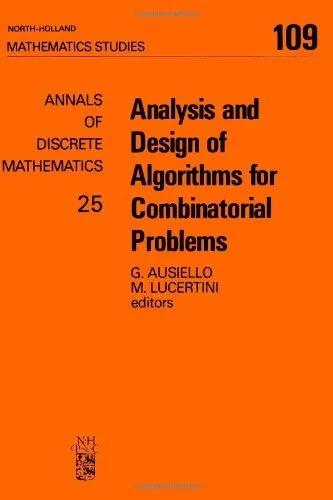
Analysis and Design of Algorithms for Combinatorial Problems
G. AusielloandM. Lucertini (Eds.)
1985
View book

Book guide and evaluation
Naveed A. Sherwani
0 reviews
Published
pages
views
Introduction to "Algorithms for VLSI Physical Design Automation, Third Edition" Written by Naveed A. Sherwani, "Algorithms for VLSI Physical Design Automation, Third Edition" is a comprehensive guide to the intricate world of Very-Large-Scale Integration (VLSI) physical design
Before you read
Written by Naveed A. Sherwani, "Algorithms for VLSI Physical Design Automation, Third Edition" is a comprehensive guide to the intricate world of Very-Large-Scale Integration (VLSI) physical design. This book serves as a cornerstone resource for students, researchers, and professionals in the field of VLSI design automation. With its structured approach, it lays out the complete landscape of algorithms, methodologies, and techniques that enable efficient physical design automation.
As the VLSI systems grow in complexity and scale, the automation of physical design processes becomes increasingly critical in ensuring optimized performance. This book provides theoretical foundations as well as practical solutions that cater to real-world challenges in the VLSI design space. Whether you are an academic diving into research or an engineer seeking scalable solutions to design problems, this book serves as a definitive guide to mastering the art of VLSI physical design algorithms.
The book comprehensively covers all aspects of VLSI physical design automation, including placement, partitioning, floorplanning, and routing. By delving into essential algorithms, it evaluates their efficiency, design considerations, and applicability for modern VLSI processes.
The book is structured to progressively introduce topics, starting with fundamental design automation concepts. Some of the covered topics include:
The book balances theoretical depth with practical examples, providing readers the tools they need to both understand and implement complex VLSI algorithms. It is organized to serve as a textbook for courses while simultaneously acting as a practical handbook for professionals in the industry.
The primary takeaways from this book revolve around its ability to bridge the knowledge gap between theoretical concepts of algorithms and their pragmatic use within the VLSI design automation landscape. Here are some of the key takeaways:
The book features many thought-provoking perspectives on VLSI physical design algorithms. Below are some notable quotes:
"The success of physical design automation lies in its ability to effectively balance computational complexity and system requirements."
"Algorithms are the true enablers of innovation in VLSI design; they transform art into science and interruptions into opportunities."
"Physical design is where hardware meets geometry, and optimization meets creativity."
"Algorithms for VLSI Physical Design Automation, Third Edition" stands out as a seminal work in the domain of VLSI design. Here's why it matters:
Overall, this book continues to be a critical resource for anyone aiming to excel in the advanced field of VLSI physical design automation. With its detailed explanations, balanced focus on theory and applications, and emphasis on algorithmic thinking, it remains a timeless companion for VLSI enthusiasts.
Your question is answered in the context of this title and author. Each answer uses 2 points.
0 reviews, 4.0 average out of 5
Sign in to publish a review.
Ask a focused question and learn from the community.
Related references that continue this learning path.
G. AusielloandM. Lucertini (Eds.)