
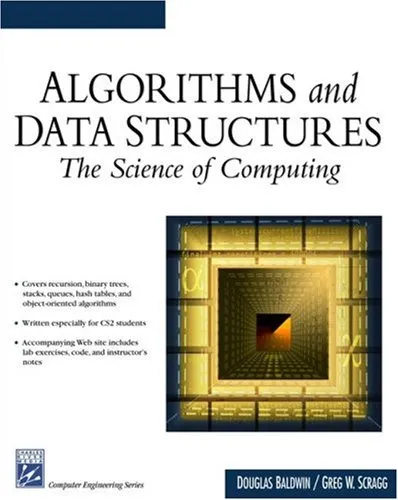
Algorithms and Data Structures: The Science of Computing (Electrical and Computer Engineering Series)
Douglas Baldwin,Orit Hazzan,Greg W. Scragg
English
Beginner
Art
4.4 / 5
0 reviews
2004
Published
570
pages
276
views
Introduction Welcome to "Algorithms and Data Structures: The Science of Computing", a comprehensive exploration of the fundamental principles of computer science that serve as the very foundation of modern computing. This book is a part of the renowned Electrical and Compu
Before you read
What will you get from this book?
Introduction
Welcome to "Algorithms and Data Structures: The Science of Computing", a comprehensive exploration of the fundamental principles of computer science that serve as the very foundation of modern computing. This book is a part of the renowned Electrical and Computer Engineering Series and is crafted for anyone eager to understand the art and science behind algorithms and data structures.
Whether you're a university student, instructor, or an experienced software engineer aiming to sharpen your understanding of computational concepts, this book is designed to provide a broad yet in-depth framework. By integrating theoretical knowledge with practical problem-solving approaches, the text makes key computational ideas not only accessible but also highly applicable in real-world scenarios.
Detailed Summary of the Book
This book takes readers on an intellectual journey through the core principles of algorithms and data structures. From the foundational building blocks to advanced computational techniques, the text is carefully structured into a logical progression of topics.
Key topics include the analysis of algorithms, dynamic programming, divide-and-conquer strategies, graph theory, and sorting and searching techniques. The book also delves deep into the design patterns that underpin computational solutions, demonstrating how solving problems requires both creativity and well-founded principles.
What sets this book apart is its balanced approach: while it reinforces theoretical rigor, every chapter incorporates practical examples and thought-provoking exercises. Using pseudocode and real examples, readers can see how abstract concepts are translated into concrete solutions. Moreover, the emphasis on both efficiency and correctness ensures that readers develop a holistic understanding of programming.
By the end of the book, readers will have mastered both the scientific foundations of computing and the pragmatic techniques essential for efficient algorithm design. These insights will not only enrich the understanding of standard data structures like stacks, queues, trees, and graphs but also prepare readers to confront novel computational problems effectively.
Key Takeaways
- A thorough introduction to the mathematical foundations of algorithms, including asymptotic analysis and complexity classes.
- Practical insights into designing algorithms and choosing the optimal data structures for specific problems.
- An educational emphasis on algorithm optimization and efficiency to ensure both time and resource constraints are met.
- Exercises and projects that encourage hands-on learning and problem-solving.
- Appreciation for the theoretical underpinnings of computing and their application to real-world systems.
Famous Quotes from the Book
"An algorithm is more than a collection of instructions; it is the crystallization of logic and creativity into a process that solves a problem efficiently."
"The real complexity of computing lies not in the machines but in the elegance of the algorithms that control them."
"Understanding data structures is akin to understanding the language of a computer—the clearer our constructs are, the easier it is to communicate meaningfully."
Why This Book Matters
In an era where computers dominate every facet of our lives, the importance of algorithms and data structures cannot be overstated. They are the essence of efficiency, powering everything from search engines to financial systems. By mastering these concepts, one steps into the very heartbeat of problem-solving in the digital age.
This book matters because it serves as a bridge between theory and practice, enabling readers to tackle problems systematically and innovate new ones. It empowers students to excel academically, professionals to stay ahead in a competitive landscape, and enthusiasts to appreciate the beauty of computational thinking.
Beyond the technical depth, this book is a reminder of the creativity inherent to programming. It reinforces the idea that algorithms and data structures are not just tools—they are a form of logic-driven artistry critical to shaping the future of computing.
Ask this book
Your question is answered in the context of this title and author. Each answer uses 2 points.
Sign in to ask the book assistant.
Reader reviews
0 reviews, 4.4 average out of 5
No reviews yet
If you have read this book, help the next reader with your experience.
Write a review
Sign in to publish a review.
Reader questions and answers
Ask a focused question and learn from the community.
Sign in to ask or answer a question.
No questions yet
Be the first to ask a clear, useful question.
What to read next
Related references that continue this learning path.

Modern Computer Vision with PyTorch: A Practical Roadmap From Deep Learning Fundamentals to Advanced Applications and Generative AI, 2nd Edition
V Kishore Ayyadevara,Yeshwanth Reddy
2023
View book