
Book guide and evaluation
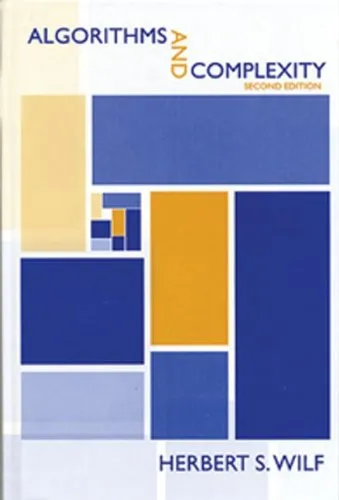
Algorithms and Complexity (Second edition)
Herbert S. Wilf
English
Beginner
Art
4.5 / 5
0 reviews
2002
Published
230
pages
291
views
Introduction Welcome to Algorithms and Complexity (Second Edition), a book designed to enlighten, engage, and empower readers who want to understand the fascinating world of algorithms and computational complexity. This book is crafted both for students embarking on their
Before you read
What will you get from this book?
Introduction
Welcome to Algorithms and Complexity (Second Edition), a book designed to enlighten, engage, and empower readers who want to understand the fascinating world of algorithms and computational complexity. This book is crafted both for students embarking on their journey into computer science and seasoned professionals looking to refine their understanding of algorithm design and analysis. With clarity, rigor, and an accessible tone, this book explores fundamental and advanced topics in algorithms and computational theory while ensuring readers grasp the real-world relevance of what they learn.
Understanding algorithms lies at the heart of mastering computer science and problem-solving. In this edition, we have expanded and refined our content to include state-of-the-art methods and concepts, ensuring learners are equipped with knowledge that stands the test of time. Packed with engaging examples, thought-provoking exercises, and intuitive explanations, Algorithms and Complexity offers an unparalleled guide to this critical domain.
Detailed Summary of the Book
This book delves deep into the fundamental principles of algorithms and computational complexity, catering to readers ranging from novices to experts. By offering clarity in the face of complexity, the book is divided into core themes that cover everything from foundational methodologies to cutting-edge concepts.
The book begins with a review of algorithmic basics, including data structures, sorting algorithms, and algorithm analysis. It then advances into deeper topics such as graph theory, dynamic programming, NP-completeness, and approximation algorithms. Concepts are explained in a step-by-step manner, with mathematical analysis provided alongside intuitive reasoning to cater to different learning styles. The second edition also introduces new chapters on randomized algorithms and parallel computing, ensuring readers are up-to-date with contemporary computational trends.
Special attention is given to the concept of computational complexity, one of the most profound areas of computer science. This part explores P versus NP, reductions, and the significance of understanding computational limits in problem-solving.
Each chapter ends with a set of carefully crafted exercises, allowing readers to test their understanding and internalize key principles. Additionally, numerous examples throughout the text demonstrate how algorithms drive advancements in technology, from search engines to artificial intelligence.
Key Takeaways
- Foundational Knowledge: Gain a strong understanding of fundamental topics, such as data structures, sorting algorithms, and graph traversal methods.
- Advanced Techniques: Dive into advanced concepts like NP-completeness, dynamic programming, and approximation algorithms.
- Comprehensive Examples: Explore numerous examples designed to provide a practical understanding of how algorithms function in real-world applications.
- Practical Problem-Solving: Learn to analyze problems, create efficient solutions, and evaluate their computational cost.
- Modern Topics: Discover advanced topics like randomized algorithms and parallel computing, bridging the gap between theory and practice.
Famous Quotes from the Book
This book has many moments of clarity that resonate with readers, helping them see the beauty of algorithms and computational science. Here are a few particularly memorable quotes:
"An algorithm is not just a recipe for solving a problem, but a profound insight into the inner workings of computation itself."
"To study algorithms is to learn the language of problem-solving, a toolset that transcends disciplines and industries."
"The difference between a good algorithm and a great one is efficiency—a small but crucial miracle of clever design."
Why This Book Matters
Algorithms and Complexity (Second Edition) has established itself as a cornerstone text for anyone serious about understanding the fundamentals of computation. But why does it matter? Here's why:
In the modern era, algorithms power everything from the internet to artificial intelligence, from logistics to health care. By mastering the principles of algorithm design and analysis, readers gain the tools to tackle problems across a wide range of domains. This book not only teaches algorithms but also offers insights into how computation shapes the world we live in.
Moreover, the text's approach bridges the gap between theoretical rigor and practical insight. For students, it serves as an essential foundation for coursework and research. For professionals, it offers a deeper understanding of tools they use every day. For anyone in between, it is an invitation to explore and appreciate the beauty of computational thinking.
Ultimately, this book matters because it empowers readers with the knowledge to understand, innovate, and inspire in an increasingly digital world.
As you journey through these pages, you will discover that algorithms are not just tools—they are a lens through which we can view and solve the challenges of the world around us. Welcome to Algorithms and Complexity, where curiosity and rigor converge to unlock endless possibilities.
Ask this book
Your question is answered in the context of this title and author. Each answer uses 2 points.
Sign in to ask the book assistant.
Reader reviews
0 reviews, 4.5 average out of 5
No reviews yet
If you have read this book, help the next reader with your experience.
Write a review
Sign in to publish a review.
Reader questions and answers
Ask a focused question and learn from the community.
Sign in to ask or answer a question.
No questions yet
Be the first to ask a clear, useful question.
What to read next
Related references that continue this learning path.
Modern Computer Vision with PyTorch: A Practical Roadmap From Deep Learning Fundamentals to Advanced Applications and Generative AI, 2nd Edition
V Kishore Ayyadevara,Yeshwanth Reddy
2023
View book