
Book guide and evaluation
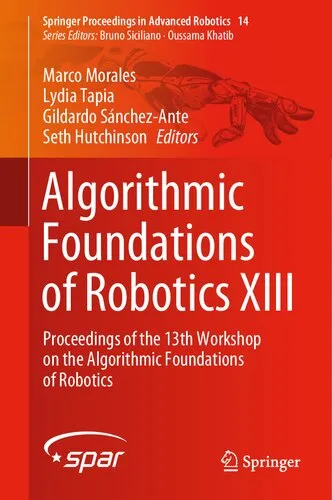
Algorithmic Foundations of Robotics XIII: Proceedings of the 13th Workshop on the Algorithmic Foundations of Robotics (Springer Proceedings in Advanced Robotics, 14)
Marco Morales (editor),Lydia Tapia (editor),Gildardo Sánchez-Ante (editor),Seth Hutchinson (editor)
English
Beginner
Engineering
4.5 / 5
0 reviews
2020
Published
962
pages
136
views
Introduction to "Algorithmic Foundations of Robotics XIII" "Algorithmic Foundations of Robotics XIII" is a comprehensive and cutting-edge volume that explores the latest advancements and fundamental principles within the field of robotics. As the proceedings from the 13t
Before you read
What will you get from this book?
Introduction to "Algorithmic Foundations of Robotics XIII"
"Algorithmic Foundations of Robotics XIII" is a comprehensive and cutting-edge volume that explores the latest advancements and fundamental principles within the field of robotics. As the proceedings from the 13th Workshop on the Algorithmic Foundations of Robotics (WAFR), this book serves as a critical reference point for academic researchers, industry professionals, and robotics enthusiasts. Published as part of the Springer Proceedings in Advanced Robotics series, this book offers profound insights into the algorithms, computational methods, and innovative strategies that are shaping the future of robotics.
Summary of the Book
This volume is a treasure trove of scholarly works gathered from leading researchers and practitioners within the robotics domain. Organized into several thematic areas, the book covers topics ranging from motion planning, perception, manipulation, and optimization to advances in robot learning and human-robot interaction. With each study being peer-reviewed and meticulously edited, the book effectively showcases the most promising algorithms and new computational models that address the challenges faced by robotic systems.
The 13th installment of WAFR continues its tradition of fostering interdisciplinary collaboration, engaging experts in computer science, mathematics, mechanical engineering, and artificial intelligence. These contributions are not just theoretical; they provide practical implementations and real-world case studies that bring depth and clarity to the intricate challenges of automating physical tasks in dynamic environments. The book also addresses scalability, ensuring that the proposed solutions can be applied to robotics systems operating in complex and high-dimensional spaces.
What sets this book apart is its focus on the algorithmic side of robotics, providing a foundation for readers to understand how computational methods are at the core of intelligent behavior and robotic autonomy. The outcome is a perfect marriage of theoretical rigor and experimental validation, a hallmark of the WAFR series.
Key Takeaways
One of the standout aspects of "Algorithmic Foundations of Robotics XIII" is its ability to distill complex ideas into actionable and well-documented approaches. Below are some key takeaways from this book:
- Cutting-edge techniques in motion planning, ranging from sampling-based and optimization-based methods to newer paradigms such as machine learning-driven planning algorithms.
- Frameworks for integrating perception with control, enabling robots to operate more effectively in unstructured and uncertain real-world environments.
- A detailed exploration of multi-robot coordination and algorithms for collaborative robotic systems, offering solutions for applications in manufacturing and search-and-rescue missions.
- Insights into the interplay between hardware constraints and algorithm design, contributing to the development of robust and efficient robotics systems.
- A forward-looking discussion on the ethical, societal, and technical implications of increased robotic autonomy.
Famous Quotes from the Book
"Algorithms are the language through which robots comprehend their environment, make decisions, and act autonomously."
"True innovation lies in finding scalable solutions that can adapt and thrive in the dynamic landscapes of the real world."
Why This Book Matters
The robotics field is advancing at an unprecedented pace, and algorithmic foundations remain the cornerstone that underpins every breakthrough. "Algorithmic Foundations of Robotics XIII" offers a timely and critical contribution toward the understanding and application of algorithms to robotic systems. For academics, it presents cutting-edge research and methodologies; for professionals, it offers tangible solutions and guidance for deploying autonomous systems at scale; and for enthusiasts, it provides an in-depth view of the computational principles driving modern robotics.
By housing contributions from some of the brightest minds in the robotics research community, this book also serves as a testament to the collective effort required to tackle pressing challenges in robotic autonomy. Its relevance spans a wide array of industries, including healthcare, aerospace, manufacturing, agriculture, and disaster response, making it an indispensable resource. Whether you are a robotics researcher, a developer looking to enhance robotic capabilities, or an engineer designing the next big breakthrough, this book matters because it bridges the gap between theory and practice.
The legacy of the WAFR series, combined with the insightful contributions of this volume, guarantees that it will be a cornerstone for advancing the field of robotics for years to come.
Ask this book
Your question is answered in the context of this title and author. Each answer uses 2 points.
Sign in to ask the book assistant.
Reader reviews
0 reviews, 4.5 average out of 5
No reviews yet
If you have read this book, help the next reader with your experience.
Write a review
Sign in to publish a review.
Reader questions and answers
Ask a focused question and learn from the community.
Sign in to ask or answer a question.
No questions yet
Be the first to ask a clear, useful question.
What to read next
Related references that continue this learning path.


Modern Computer Vision with PyTorch: A Practical Roadmap From Deep Learning Fundamentals to Advanced Applications and Generative AI, 2nd Edition
V Kishore Ayyadevara,Yeshwanth Reddy
2023
View book