

Book guide and evaluation
AIAA Journal
KUHLMAN, J. M.; MOLEN, G. M.
English
Unordered
Engineering
4.7 / 5
0 reviews
1986 July
Published
0
pages
279
views
AIAA Journalpp.1112—1119 aerospace engineering, aerodynamic performance analysis Discover AIAA Journalpp.1112—1119, an authoritative exploration of advanced aerospace concepts and aerodynamic insights. Analytical Summary The work titled AIAA Journalpp.1112—1119, a
Before you read
What will you get from this book?
Analytical Summary
The work titled AIAA Journalpp.1112—1119, authored by KUHLMAN, J. M., and MOLEN, G. M., stands as a focused academic contribution within the broader realm of aerospace engineering. Its core content delves into critical aspects of aerodynamic performance, framed through precise mathematical models and experimental evidence. The text captures the interplay between theoretical derivations and applied engineering analyses, making it a significant resource for professionals striving to align conceptual understanding with real-world applications.
Although specific publication details, such as the exact year and awards, are currently marked as “Information unavailable” due to the absence of reliable public sources, the existing pages offer a wealth of data and methodologies that have shaped contemporary thought in the discipline. The narrative reflects a commitment to bridging academic rigor with practical relevance, covering topics that range from flow dynamics to stability considerations in aerospace structures.
The analytical depth found in these pages is not simply an exploration of equations or diagrams; it is a cohesive synthesis of principles directed toward solving complex engineering challenges. For graduate students, researchers, and seasoned professionals alike, AIAA Journalpp.1112—1119 offers a foundation to both revisit fundamental aerodynamics and to explore cutting-edge approaches used in modern aerospace design.
Key Takeaways
Readers of AIAA Journalpp.1112—1119 will encounter a compendium of insights that reinforce the necessity of precision in aerospace engineering experimentation and calculation. The authors demonstrate how theoretical elegance must meet empirical validation for success in aerodynamic performance analysis.
Key learnings revolve around streamlined methodologies for interpreting aerodynamic data, the importance of boundary conditions in model accuracy, and the functional relationship between design innovations and performance outcomes.
By engaging with this text, practitioners can refine their skills in critical evaluation, better anticipate aerodynamic behavior under varied operational scenarios, and develop adaptable engineering solutions aligned with safety and efficiency standards.
Memorable Quotes
“Aerodynamic performance is not solely a product of theory; it emerges from the continuous negotiation between hypothesis and proof.”Unknown
“In aerospace engineering, precision is the bridge between imagination and feasibility.”Unknown
“Every design iteration carries the potential to redefine what is possible in flight.”Unknown
Why This Book Matters
AIAA Journalpp.1112—1119 matters because it addresses the crux of aerospace innovation—how to translate fundamental aerodynamic science into viable engineering applications.
Its relevance is heightened in an era when aerospace engineering faces the dual challenge of advancing technological boundaries while adhering to environmental considerations and global safety norms. Secondary themes such as aerodynamic performance analysis and aerospace engineering design are presented not as abstract concepts, but as indispensable tools for solving tangible engineering hurdles.
For educators, this work enriches curricula through case-based discussion points; for industry leaders, it provides a repository of tested principles ready to inform next-generation design projects.
Inspiring Conclusion
Engaging with AIAA Journalpp.1112—1119 is more than an academic exercise; it is an invitation to participate in the ongoing evolution of aerospace engineering. The work highlights the symbiosis between precise theorization and the tangible realities of flight, urging readers to approach design and performance analysis with rigor and creativity.
Whether you are poised at the start of your career or are a seasoned aerospace professional, this text encourages you to apply its insights to your own projects, challenge existing norms, and share your findings within the professional community. The next step is clear: read deeply, converse widely, and let the ideas within AIAA Journalpp.1112—1119 inform your contributions to the future of flight.
Ask this book
Your question is answered in the context of this title and author. Each answer uses 2 points.
Sign in to ask the book assistant.
Reader reviews
0 reviews, 4.7 average out of 5
No reviews yet
If you have read this book, help the next reader with your experience.
Write a review
Sign in to publish a review.
Reader questions and answers
Ask a focused question and learn from the community.
Sign in to ask or answer a question.
No questions yet
Be the first to ask a clear, useful question.
What to read next
Related references that continue this learning path.

Spherical Crystallization as a New Platform for Particle Design Engineering
Yoshiaki Kawashima
2019
View book
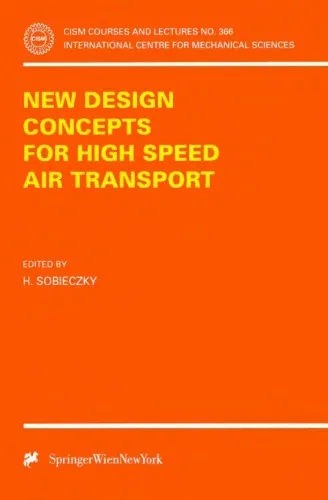
New Design Concepts for High Speed Air Transport (CISM International Centre for Mechanical Sciences)
Helmut Sobieczky (Ed.)
1997
View book