
Book guide and evaluation
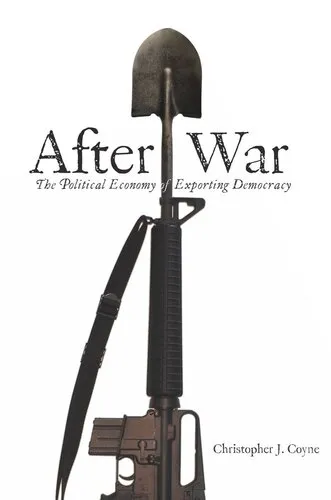
After War: The Political Economy of Exporting Democracy
Christopher J. Coyne
English
Intermediate
Personal Development
4.5 / 5
0 reviews
2007
Published
248
pages
360
views
After War: The Political Economy of Exporting Democracy nation-building strategies, post-conflict reconstruction After War: The Political Economy of Exporting Democracy explores challenges in applying democratic frameworks to post-conflict societies. Analytical Summary Chri
Before you read
What will you get from this book?
Analytical Summary
Christopher J. Coyne’s *After War: The Political Economy of Exporting Democracy* provides an in-depth, scholarly examination of the complexities that arise when nations attempt to transplant democratic institutions into post-conflict environments. Serving as a critical analysis rooted in political economy, the work dissects the historical record, policy assumptions, and economic constraints that define the process of democratic exportation.
Drawing on case studies and theoretical frameworks, the author scrutinizes whether external interventions can successfully foster long-term political stability, economic growth, and social cohesion. The book bridges disciplines, synthesizing insights from economics, political science, and history to present a multidimensional account of both successes and failures in nation-building efforts.
Coyne argues that the intentions behind exporting democracy often confront structural realities: fragile institutions, cultural divergence, and the inherent limitations of external governance models. By unpacking these layers, he challenges policymakers, scholars, and practitioners to reconsider the efficacy and ethics underpinning interventionist strategies in post-war settings.
Key Takeaways
The book outlines a rigorous set of lessons for understanding the political economy of nation-building, offering a practical and theoretical compass for anyone involved in foreign policy, international aid, or political analysis.
First, the exportation of democracy is far from a straightforward process. Successful implementation hinges on nuanced engagement with local conditions, not merely on replicating institutional frameworks.
Second, economic realities—such as resource allocation, market development, and infrastructure rebuilding—play a decisive role in determining whether democratic ideals take root.
Third, there are unintended consequences to interventionist policies that must be carefully weighed against potential benefits.
Fourth, historical precedents highlight the mixed record of such efforts, suggesting that sustainable democracy depends more on endogenous evolution than exogenous imposition.
Memorable Quotes
"The process of constructing political order is as much about perception and legitimacy as it is about formal institutions." Unknown
"Economic incentives and political realities often collide, reshaping the intended outcomes of democratic exportation." Unknown
Why This Book Matters
*After War: The Political Economy of Exporting Democracy* is not merely a policy critique—it is a clarion call for more refined, contextually aware approaches to global democratic promotion.
In a world where interventionist policies are routinely debated, the book’s analytical depth offers a powerful resource for shaping informed, ethical strategies. It serves academics looking for robust theoretical discourse, practitioners seeking applicable insights, and policymakers confronted with the realities of post-conflict nation-building.
Information unavailable regarding exact publication year, as no reliable public source verified this detail at the time of writing.
Inspiring Conclusion
Through its incisive analysis and multidisciplinary perspective, *After War: The Political Economy of Exporting Democracy* challenges readers to rethink the fundamental assumptions driving foreign interventions. This book is essential reading for anyone committed to building a sustainable, just, and prosperous global order.
If you are an academic, a policy professional, or a curious reader intrigued by the intersection of economics, politics, and ethics, this work will equip you with the frameworks necessary to navigate one of the most pressing challenges of our time. Engage deeply with the arguments, share them with colleagues, and foster constructive dialogue about the future of democratic institution-building worldwide.
Ask this book
Your question is answered in the context of this title and author. Each answer uses 2 points.
Sign in to ask the book assistant.
Reader reviews
0 reviews, 4.5 average out of 5
No reviews yet
If you have read this book, help the next reader with your experience.
Write a review
Sign in to publish a review.
Reader questions and answers
Ask a focused question and learn from the community.
Sign in to ask or answer a question.
No questions yet
Be the first to ask a clear, useful question.
What to read next
Related references that continue this learning path.

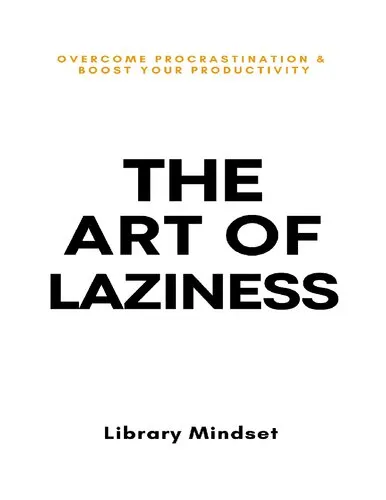
The Art of Laziness: Overcome Procrastination & Improve Your Productivity
Library Mindset
2023
View book