

UX Research Methods for Media and Communication Studies: An Introduction to Contemporary Qualitative Methods
Angela M. Cirucci,Urszula M. Pruchniewska
2022
View book
Book guide and evaluation
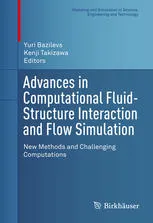
Yuri Bazilevs,Kenji Takizawa (eds.)
0 reviews
Published
pages
views
Introduction to "Advances in Computational Fluid-Structure Interaction and Flow Simulation: New Methods and Challenging Computations" "Advances in Computational Fluid-Structure Interaction and Flow Simulation: New Methods and Challenging Computations" explores the cutting-edge
Before you read
"Advances in Computational Fluid-Structure Interaction and Flow Simulation: New Methods and Challenging Computations" explores the cutting-edge aspects of computational techniques used to model, simulate, and analyze fluid-structure interactions and complex flow problems. Curated and written by leading experts Yuri Bazilevs and Kenji Takizawa, this book presents significant theoretical developments, numerical methods, and groundbreaking research to address some of the most challenging scenarios in scientific computation and engineering.
Fluid-structure interaction (FSI) and computational flow simulation are disciplines vital to a range of real-world applications, from designing resilient civil engineering structures to developing aerodynamically optimized vehicles and aircraft. As technologies advance and computational power increases, researchers can now tackle FSI and flow problems at an unprecedented scale and accuracy. Structured to meet the needs of researchers, professionals, and advanced students, this book serves as a foundational reference for anyone keen to understand and innovate in this dynamic field.
The book emphasizes both innovation and practical applications, combining robust mathematical techniques with computational advancements such as finite element methods (FEM), isogeometric analysis (IGA), and partitioned and monolithic solution strategies. By addressing topics such as turbulence, large deformation, flexible body dynamics, and high-performance computing, the book provides comprehensive coverage of the most demanding challenges in FSI and flow simulation today.
Structured across various chapters by leading contributors in the field, the book delves deeply into new methods and challenging problems in computational FSI and related disciplines. Topics explored include:
Each section of the book provides in-depth treatment of the topics, blending theoretical foundations with computational innovations. Readers will appreciate the balance of mathematical rigor and practical computational implementation, making the content both intellectually enriching and application-oriented.
"The synergy of geometry and analysis in isogeometric techniques is a major stepping stone toward seamless and accurate physical system representations."
"Numerical simulation of fluid-structure interaction is a bridge where mathematics meets engineering, creating solutions not just for today’s challenges but for future innovations."
"Flow and structure interact dynamically, reminding us that no physical problem exists in isolation."
The field of computational fluid-structure interaction has undergone transformative growth as advancements in computational power and mathematical theory converge. This book is critical because it goes beyond traditional methods, bringing together innovative approaches and practical solutions to tackle the most complex problems faced by engineers, scientists, and computational researchers.
From ensuring structural integrity during extreme environmental conditions to creating sustainable and efficient designs, the methodologies presented in this book are at the forefront of modern computational science. The authors’ collective expertise ensures that this work not only showcases influential research but also serves as a foundation for advancing the field further. Whether you are a graduate student, a researcher, or a practicing engineer, the insights offered in "Advances in Computational Fluid-Structure Interaction and Flow Simulation" will enable you to contribute meaningfully to the ever-evolving world of computational mechanics and fluid dynamics.
With its emphasis on new methods, rigorous computation, and real-world applications, this book stands as a definitive guide to understanding the challenges and solutions in computational fluid-structure interaction and flow simulation.
Your question is answered in the context of this title and author. Each answer uses 2 points.
0 reviews, 4.5 average out of 5
Sign in to publish a review.
Ask a focused question and learn from the community.
Related references that continue this learning path.
Angela M. Cirucci,Urszula M. Pruchniewska

P. L. Roe,J. J. Chattot
Wenbing Hu,An-Chang Shi,Editors
Wenbing Hu;An-Chang Shi