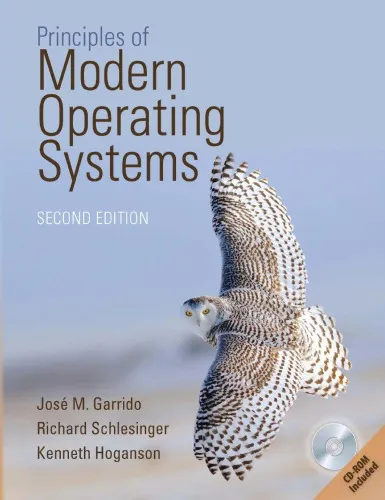
Principles Of Modern Operating Systems
Jose M Garrido,Richard Schlesinger,Kenneth Hoganson
2011
View book
Book guide and evaluation
W. Richard Stevens
0 reviews
Published
pages
views
Introduction Welcome to the world of UNIX programming! "Advanced Programming in the UNIX Environment" by W. Richard Stevens is a seminal work that serves as an in-depth guide for anyone looking to master UNIX system programming. Known for its clarity and compre
Before you read
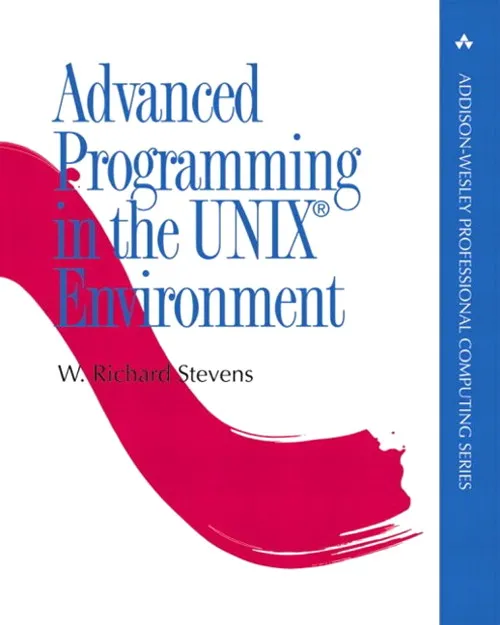
Welcome to the world of UNIX programming! "Advanced Programming in the UNIX Environment" by W. Richard Stevens is a seminal work that serves as an in-depth guide for anyone looking to master UNIX system programming. Known for its clarity and comprehensive coverage, this book has become an essential resource for software developers, system administrators, and computer science students who aim to understand the intricacies of UNIX and its derivatives.
This book delves deeply into the core aspects of UNIX system programming, offering a valuable exploration of UNIX file systems, distributions, and APIs. Its chapters cover the UNIX System Interfaces, discussing Input and Output, Files and Directories, System Data Files, Processes, and their Environments. Later sections encompass more advanced topics such as Interprocess Communication mechanisms, including Signals, Threads, and Sockets. Each chapter is meticulously crafted to build upon the concepts introduced earlier, allowing the reader to develop a robust understanding of UNIX programming.
Furthermore, the book emphasizes best practices, imparting valuable insights on writing efficient and maintainable UNIX programs. With numerous example codes and real-world scenarios, the book offers detailed step-by-step instructions for handling common programming tasks and solving complex problems within the UNIX environment.
"The greatest enemy of knowledge is not ignorance, it is the illusion of knowledge."
"Understanding the UNIX system's rules and conventions leads to better system design."
"Advanced Programming in the UNIX Environment" is more than just a textbook; it is a cornerstone in the field of UNIX system programming. Its detailed and methodical approach offers readers the tools needed to harness the power of UNIX, a system that has formed the backbone of countless other operating systems, including Linux and MacOS. The book's relevance and importance stem from its role as an authoritative resource that continues to educate and inspire generations of programmers.
By providing a platform from which readers can understand and leverage the robust capabilities of UNIX, this book remains crucial not just for its technical insights but also for its influence in shaping proficient, knowledgeable UNIX practitioners. Whether you are a novice or an experienced programmer, "Advanced Programming in the UNIX Environment" is an invaluable asset in your technical library.
Your question is answered in the context of this title and author. Each answer uses 2 points.
0 reviews, 5.0 average out of 5
Sign in to publish a review.
Ask a focused question and learn from the community.
Related references that continue this learning path.
Jose M Garrido,Richard Schlesinger,Kenneth Hoganson