Book guide and evaluation
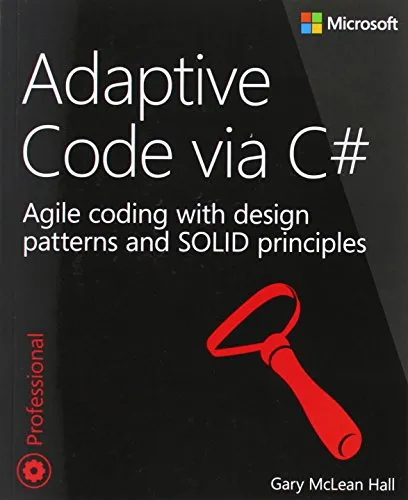
Adaptive Code via C#: Agile coding with design patterns and SOLID principles
Gary McLean Hall
English
Advanced
Software Development
4.3 / 5
0 reviews
2014
Published
433
pages
558
views
Introduction Welcome to the realms of "Adaptive Code via C", a transformative guide that bridges the gap between programming paradigms and real-world software engineering. This book is designed to empower developers of all levels to adapt to the rapidly changing software
Before you read
What will you get from this book?
Introduction
Welcome to the realms of "Adaptive Code via C", a transformative guide that bridges the gap between programming paradigms and real-world software engineering. This book is designed to empower developers of all levels to adapt to the rapidly changing software landscape. It provides insights into building flexible and maintainable code using modern C# programming practices.
Detailed Summary of the Book
"Adaptive Code via C" is a compelling narrative that explores the necessity of evolutionary code development. The book meticulously outlines how to achieve cleaner, more efficient coding structures that respond adeptly to change. It begins with the core principles of adaptive code, including the concept of managing dependencies and embracing SOLID principles. You will learn about the cutting-edge methodologies like Domain-Driven Design and how these principles can solve complex architectural challenges. Each chapter progresses from foundational theory to implementation strategies. The book heavily emphasizes the importance of unit testing and test-driven development, imparting a deep understanding of why tests are a coder's best ally. Additionally, you will gain insights into employing refactoring techniques and embracing design patterns that support a sustainable codebase. With real-world examples, this book equips you to build robust systems that stand the test of time.
Key Takeaways
- Understand the SOLID principles and their importance in writing adaptive code.
- Learn how to decouple your code to reduce dependencies and improve testability.
- Master refactoring techniques to transition from legacy systems to modern architectures.
- Explore Domain-Driven Design to create a code structure that reflects complex business rules.
- Discover best practices for implementing design patterns that promote code adaptability.
- Embrace the significance of continuous integration and deployment in modern software development.
Famous Quotes from the Book
"Adaptive code is not just about changing what you write; it's about changing how you think."
"In the world of software, the need for adaptability is a given, but achieving it is an art."
Why This Book Matters
In an industry fueled by innovation and rapid evolution, "Adaptive Code via C" stands out as a crucial reading for developers striving for excellence. This book matters because it not only presents a blueprint for writing flexible and maintainable code but also reshapes the conventional thinking about software development. By adopting the principles laid out in this book, developers and teams can significantly increase their productivity, decrease their technical debt, and improve the overall quality of their codebases. It provides the foundational understanding required to navigate complex projects and is invaluable for anyone looking to make a meaningful impact in the world of technology.
Ask this book
Your question is answered in the context of this title and author. Each answer uses 2 points.
Sign in to ask the book assistant.
Reader reviews
0 reviews, 4.3 average out of 5
No reviews yet
If you have read this book, help the next reader with your experience.
Write a review
Sign in to publish a review.
Reader questions and answers
Ask a focused question and learn from the community.
Sign in to ask or answer a question.
No questions yet
Be the first to ask a clear, useful question.
What to read next
Related references that continue this learning path.
C# - Gang Of Four - Design Patterns, Elements Of Reusable Object Oriented Software
Erich Gamma,Richard Helm,Ralph Johnson,John M. Vlissides
1998
View book