

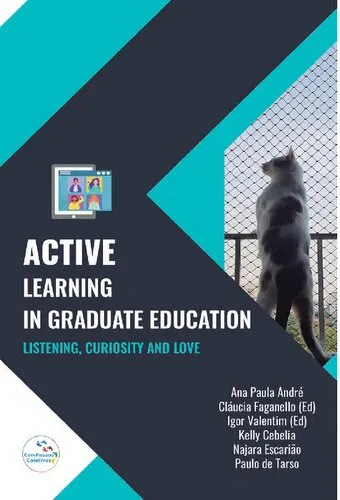
Book guide and evaluation
Active Learning in Graduate Education: listening, curiosity and love
Igor Vinicius Lima Valentim,Cláucia Piccoli Faganello,Ana Paula André,Kelly Cebelia das Chagas do Amaral,Najara Escarião Agripino,Paulo de Tarso Xavier Sousa Junior
English
Beginner
novel
4.7 / 5
0 reviews
2023
Published
157
pages
369
views
Welcome to a transformative exploration of educational practices within graduate studies. "Active Learning in Graduate Education: Listening, Curiosity and Love" presents a compelling narrative on reshaping the learning landscape by fostering active engagement, empathy, and
Before you read
What will you get from this book?
Welcome to a transformative exploration of educational practices within graduate studies. "Active Learning in Graduate Education: Listening, Curiosity and Love" presents a compelling narrative on reshaping the learning landscape by fostering active engagement, empathy, and intellectual inquisitiveness among graduate students. This book serves not only as a guide but as an inspiration to educators and learners alike, empowering them to embrace new methodologies that promote a deeper understanding and connection within educational frameworks.
Detailed Summary of the Book
This book delves into the nuances of active learning, a pedagogical approach that contrasts sharply with traditional methods focused on passive reception of information. Through vivid examples, it illustrates how active learning incorporates discussion, problem-solving, case studies, role plays, and other interactive techniques that encourage students to participate actively in their education.
Central to the book's thesis is the premise that active learning should be shaped by listening, curiosity, and love. The authors argue that by actively listening, educators can better understand the diverse needs of students. Curiosity is framed as a vital driver of inquiry-based learning, where students are encouraged to ask questions and seek out knowledge proactively. Love, an often-overlooked element in educational settings, is posited as a critical component for nurturing an environment where students feel valued and motivated.
The book is structured to guide educators through the journey of implementing active learning strategies. It provides practical tools and case studies that highlight successes and challenges. By embedding these strategies, educators can facilitate a more dynamic and inclusive classroom environment that empowers students not just to learn, but to think critically and innovatively.
Key Takeaways
- Active learning transforms passive educational experiences into engaging, insightful, and dynamic learning opportunities.
- Listening with empathy can significantly enhance the educator-student relationship and address diverse learning needs.
- Cultivating curiosity within the learning environment leads to higher student engagement and academic success.
- Incorporating love as a foundational principle of education fosters a supportive and inclusive learning atmosphere.
Famous Quotes from the Book
"Listening is not just about hearing words. It's about understanding the feelings that accompany those words."
"Curiosity is the engine of academic growth; it propels students forward in their educational journeys."
"When love infuses the learning environment, it becomes a sanctuary of growth, acceptance, and limitless potential."
Why This Book Matters
In an era characterized by rapid technological advancement and information overload, traditional educational paradigms often fall short of equipping students with the skills needed for success in the modern world. "Active Learning in Graduate Education: Listening, Curiosity and Love" addresses this gap by presenting a progressive approach that emphasizes participatory learning, critical thinking, and personal connection.
The book's emphasis on listening, curiosity, and love is a pioneering perspective that challenges educators to rethink their role in fostering not only intellectual but emotional and social development in students. By adopting these principles, educators can cultivate an academic environment where students are not merely recipients of information, but active participants in their own educational adventures.
Essential for educators, students, and policymakers, this book is a clarion call for change in academic institutions worldwide. It serves as both a practical manual and a philosophical discourse, advocating for a transformative approach to graduate education that is both humane and dynamic.
Ask this book
Your question is answered in the context of this title and author. Each answer uses 2 points.
Sign in to ask the book assistant.
Reader reviews
0 reviews, 4.7 average out of 5
No reviews yet
If you have read this book, help the next reader with your experience.
Write a review
Sign in to publish a review.
Reader questions and answers
Ask a focused question and learn from the community.
Sign in to ask or answer a question.
No questions yet
Be the first to ask a clear, useful question.
What to read next
Related references that continue this learning path.
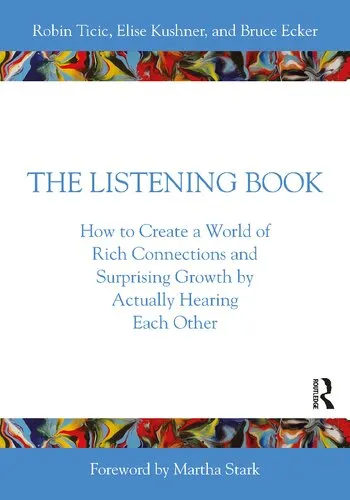
The Listening Book: How to Create a World of Rich Connections and Surprising Growth by Actually Hearing Each Other
Robin Ticic,Elise Kushner,Bruce Ecker
2023
View book