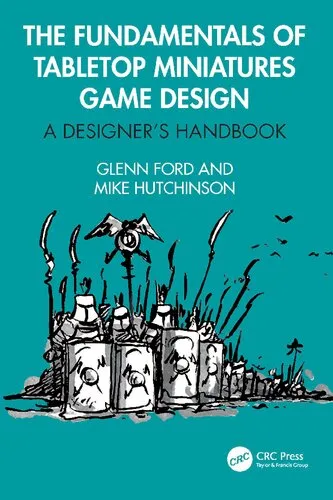
The Fundamentals of Tabletop Miniatures Game Design: A Designer’s Handbook
Glenn Ford,Mike Hutchinson
2024
View book
Book guide and evaluation
Raph Koster
0 reviews
Published
pages
views
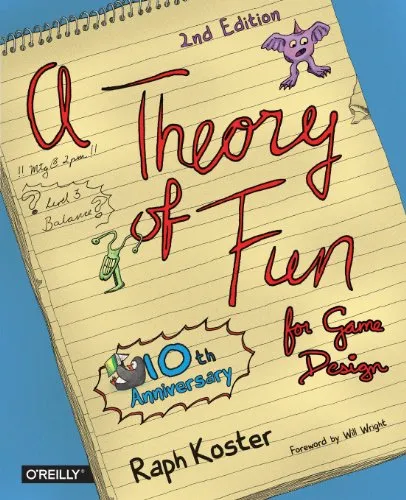
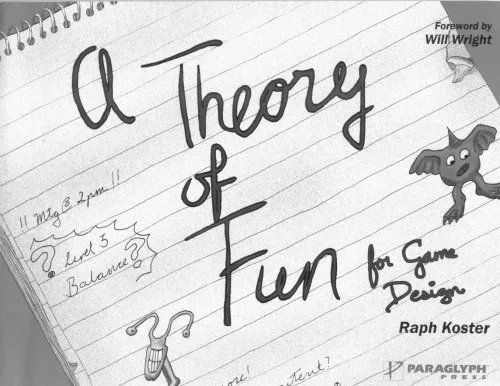
Welcome to a comprehensive introduction to Raph Koster's groundbreaking work, "A Theory of Fun for Game Design." This book offers a unique perspective on the intricacies of game design, making it a must-read for anyone interested in understanding what makes games engaging and e
Before you read
Welcome to a comprehensive introduction to Raph Koster's groundbreaking work, "A Theory of Fun for Game Design." This book offers a unique perspective on the intricacies of game design, making it a must-read for anyone interested in understanding what makes games engaging and enjoyable.
The book "A Theory of Fun for Game Design" explores the fundamental principles that make a game enjoyable and engaging. Authored by Raph Koster, an experienced game designer, the book argues that games are a form of art that can educate and entertain simultaneously. Koster articulates his ideas through a combination of personal anecdotes, illustrative cartoons, and theoretical analysis. The central theme revolves around the concept that games are "fun" because they teach us in an interactive and immersive environment. By examining the cognitive processes involved in learning and problem-solving within games, the book unveils why specific patterns and challenges captivate players and how these elements can be effectively harnessed to design better games.
"Fun is just another word for learning."
"The object of games is to fire you into a state of flow, where time seems to vanish, your brain hums with the challenge, and reality fades into the distance."
"Games are not about content; they’re about actions, choices, consequences, and emotions."
"A Theory of Fun for Game Design" is impactful for several reasons. Firstly, it demystifies the concept of fun in gaming by linking it to the acquisition of skills and knowledge. This perspective shifts the focus from mere entertainment to games' educational and cognitive benefits. Secondly, Raph Koster’s insights are beneficial for designers, educators, and enthusiasts who seek to understand how games can be leveraged for both enjoyment and learning. The book bridges the gap between game design and other creative disciplines, showing that the principles that make games fun are applicable across various fields. Finally, Koster's approachable writing style and inclusion of humorous illustrations make complex ideas accessible to a wide audience, from seasoned designers to newcomers curious about the art and science of game design.
Your question is answered in the context of this title and author. Each answer uses 2 points.
0 reviews, 4.5 average out of 5
Sign in to publish a review.
Ask a focused question and learn from the community.
Related references that continue this learning path.
Glenn Ford,Mike Hutchinson