Book guide and evaluation
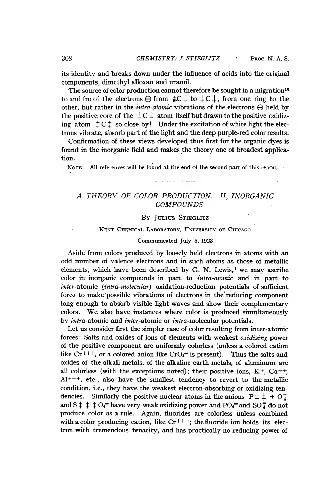
A Theory of Color Production II, Inorganic Compounds
Julius Stieglitz
English
Beginner
Painting & Drawing
4.7 / 5
0 reviews
1923
Published
5
pages
501
views
Introduction Welcome to A Theory of Color Production II, Inorganic Compounds, a profound exploration into the dynamic world of color as it pertains to inorganic compounds. In this book, I endeavor to unravel the complexities and scientific principles that dictate how colors ar
Before you read
What will you get from this book?
Introduction
Welcome to A Theory of Color Production II, Inorganic Compounds, a profound exploration into the dynamic world of color as it pertains to inorganic compounds. In this book, I endeavor to unravel the complexities and scientific principles that dictate how colors are produced and perceived across diverse inorganic materials. As the sequel to the first volume in this series, it builds upon foundational concepts and delves deeper into the roles of chemical composition, electronic structure, and environmental factors in color production.
Summary of the Book
This book takes you on an enlightening journey through the realm of inorganic compounds, focusing on how they interact with light to yield the myriad hues that decorate our visible spectrum. Drawing from cutting-edge research and theories, I explain the mechanisms behind light absorption, reflection, and transmission in these compounds. From transition metal oxides to complex salts, each chapter evaluates the role of electron arrangements and their quantum mechanical interactions, which are critical in generating specific color properties. By combining theoretical perspectives with practical examples, I aim to provide a robust understanding of why the sky is blue, why leaves appear green, and why the red hues of rust or the verdant tones of copper patina captivate our senses.
Key Takeaways
- Understand the scientific principles underlying color production in inorganic compounds.
- Gain insight into the quantum mechanical interactions that influence color perception.
- Explore various case studies across different types of inorganic materials to illustrate theoretical concepts.
- Recognize the impact of external factors such as temperature, pressure, and light on color manifestation.
Famous Quotes from the Book
"Color is nature's way of speaking in the language of light."
"The interaction of light with matter is the foundation of chromatic beauty, revealing secrets of atomic dance."
Why This Book Matters
The significance of A Theory of Color Production II, Inorganic Compounds lies in its scholastic contributions to both the scientific community and educational domains. It elucidates the intricate relationship between inorganic chemistry and optics, offering a comprehensive guide that bridges a gap between theoretical chemistry and applied physics. For students and researchers in the fields of chemistry, physics, and materials science, this book provides not only a wealth of information but also inspires a deeper appreciation of the chromatic dimensions inherent in inorganic compounds. By fostering a nuanced understanding of these processes, it aids in advancing technologies in industries ranging from pigments and coatings to advanced materials and nanotechnology.
Ask this book
Your question is answered in the context of this title and author. Each answer uses 2 points.
Sign in to ask the book assistant.
Reader reviews
0 reviews, 4.7 average out of 5
No reviews yet
If you have read this book, help the next reader with your experience.
Write a review
Sign in to publish a review.
Reader questions and answers
Ask a focused question and learn from the community.
Sign in to ask or answer a question.
No questions yet
Be the first to ask a clear, useful question.
What to read next
Related references that continue this learning path.

Directional processing of color images theory and experimental results
Trahanias,Karakos,Venetsanopoulos