
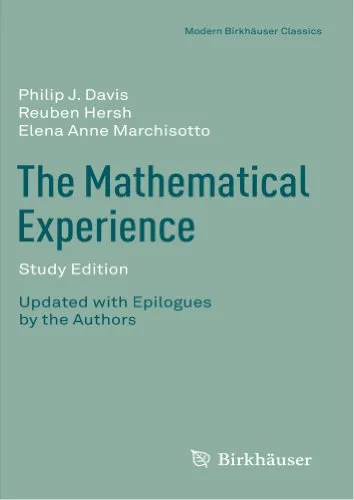
The Mathematical Experience, Study Edition
Philip J. Davis,Reuben Hersh,Elena Anne Marchisotto (auth.)
2012
View book
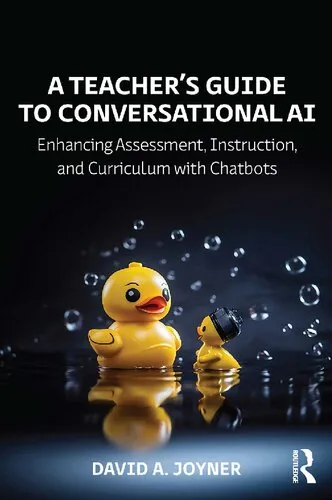
Book guide and evaluation
David A. Joyner
0 reviews
Published
pages
views
Introduction to "A Teacher’s Guide to Conversational AI: Enhancing Assessment, Instruction, and Curriculum with Chatbots" The world of education is transforming rapidly, driven by advancements in technology that are reshaping how teachers teach and students learn.
Before you read
The world of education is transforming rapidly, driven by advancements in technology that are reshaping how teachers teach and students learn. "A Teacher’s Guide to Conversational AI: Enhancing Assessment, Instruction, and Curriculum with Chatbots" serves as a comprehensive resource for educators who are ready to embrace this evolution. This book provides an in-depth exploration of one of the most groundbreaking innovations in recent years—conversational AI—and its application in the classroom.
Written with both novice and experienced educators in mind, this guide demystifies the concept of conversational AI, highlighting its potential to enrich the educational experience. Through real-world examples, practical strategies, and thoughtful discussions, this book charts a clear path for teachers to integrate AI chatbots into their teaching practices. From improving assessment efficiency to delivering personalized instruction and revamping curriculum design, conversational AI is presented as a tool not just of convenience, but of empowerment.
The book is structured to balance theory, practice, and inspiration. It begins with a foundational overview of what conversational AI is and how it has evolved over time. This sets the stage for exploring its direct implications in education. The chapters dive into specific use cases, starting with how educators can employ AI chatbots for formative and summative assessment. By using chatbots for grading, feedback, and even adaptive quizzes, teachers can save time while providing valuable insights to their students.
Another significant portion of the book focuses on instruction. The guide demonstrates how conversational agents can function as intelligent tutors, offering one-on-one personalized learning experiences to students. Whether assisting with problem-solving in STEM subjects or engaging students in language practice, these AI tools open doors for differentiated and inclusive instruction.
The curriculum design section tackles the potential of chatbots to help teachers rethink lesson planning and course materials. Thanks to AI’s natural language processing capabilities, educators are empowered to co-create dynamic and responsive curricula that meet the shifting needs of their classrooms.
The book also addresses critical considerations, such as ethics, data privacy, and bias in AI models. These issues are framed within the unique context of education, ensuring that readers develop a balanced perspective on how to responsibly leverage this technology.
“AI is not here to replace teachers; it is here to amplify their potential.”
“Conversational AI represents the bridge between technology and empathy—a bridge that can foster meaningful connections in education.”
“The power of conversational AI lies in its ability to listen, adapt, and respond to every learner individually, opening the door to truly personalized learning at scale.”
Education has always been about evolving to meet the needs of its learners, and the integration of conversational AI is one of the most exciting advancements of our time. However, the adoption of new technology often comes with challenges and uncertainties. This book is pivotal because it equips educators not only with the knowledge to understand AI chatbots but also with the practical tools and mindset to apply them effectively. As classrooms grow increasingly diverse in terms of abilities, backgrounds, and needs, conversational AI represents an opportunity to ensure no student is left behind.
In a world where technology too often feels impersonal, conversational AI has the power to restore the human element in scalable ways. By reading this book, educators will not only stay ahead of the technological curve but also become ambassadors of innovation, driving change in their schools and communities. This guide matters because it bridges the gap between education and technology, making it accessible, understandable, and actionable for teachers at every level.
Your question is answered in the context of this title and author. Each answer uses 2 points.
0 reviews, 4.5 average out of 5
Sign in to publish a review.
Ask a focused question and learn from the community.
Related references that continue this learning path.
Philip J. Davis,Reuben Hersh,Elena Anne Marchisotto (auth.)
National Research Council; Committee on DoctoralandPostdoctoral Study in the United States

Jeffrey O. Bennett,Megan O. Donahue,Nicholas Schneider,Mark Voit