Book guide and evaluation
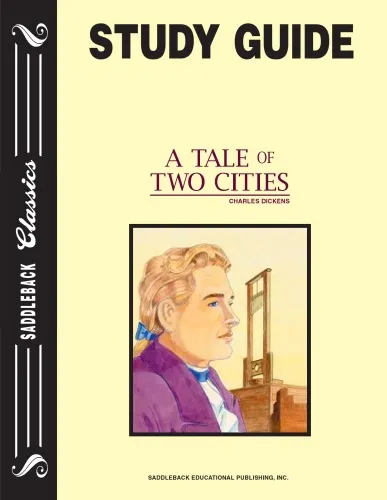
A Tale of Two Cities Study Guide
LaurelandAssociates
English
Intermediate
novel
4.9 / 5
0 reviews
1999
Published
50
pages
606
views
Introduction to the Study Guide Welcome to the comprehensive study guide for Charles Dickens' classic novel, "A Tale of Two Cities." This guide is crafted to enhance your understanding of the novel's themes, characters, and historical context while offering val
Before you read
What will you get from this book?
Introduction to the Study Guide
Welcome to the comprehensive study guide for Charles Dickens' classic novel, "A Tale of Two Cities." This guide is crafted to enhance your understanding of the novel's themes, characters, and historical context while offering valuable insights that will deepen your appreciation of Dickens' literary genius.
Detailed Summary of the Book
"A Tale of Two Cities" is a historical novel set in the tumultuous period of the French Revolution. Dickens eloquently captures the essence of the era with the opening line, "It was the best of times, it was the worst of times," reflecting the contradictions of the age. The narrative unfolds between two cities, London and Paris, against a backdrop of political unrest and societal upheaval.
The novel opens with the release of Dr. Alexandre Manette from an eighteen-year-long incarceration in the Bastille, a powerful symbol of revolutionary France's oppressive regime. He is reunited with his daughter, Lucie Manette, who becomes a beacon of hope and compassion. This reunion sets the stage for an intricate plot involving love, sacrifice, and redemption.
Key to the narrative is Charles Darnay, a French aristocrat who has forsaken his family's exploitative legacy to live a peaceful life in London. Contrasting Darnay is Sydney Carton, a disillusioned English lawyer whose journey towards personal redemption becomes one of the novel's pivotal arcs.
As the revolution intensifies, the fates of these characters intertwine amidst a wave of violence and political upheaval, encapsulating the broader themes of resurrection and transformation that permeate the work.
Key Takeaways
- Understanding the duality of human nature and society as evident in the juxtaposition of London and Paris.
- Exploring themes of self-sacrifice and redemption, exemplified by Sydney Carton's character arc.
- Analyzing the impact of social injustice and political upheaval, and its reflection on personal lives.
- Recognizing the profound influence of history on personal destinies.
Famous Quotes from the Book
"It was the best of times, it was the worst of times, it was the age of wisdom, it was the age of foolishness..."
"A wonderful fact to reflect upon, that every human creature is constituted to be that profound secret and mystery to every other."
"I wish you to know that you have been the last dream of my soul."
Why This Book Matters
"A Tale of Two Cities" remains a seminal work in English literature due to its profound exploration of themes relevant to both its time and ours. Dickens' masterful narrative weaves together the personal and the political, offering a poignant commentary on the human condition amidst societal turmoil. The novel’s exploration of duality and transformation continues to resonate with readers, providing insights into the complexity of human nature and the impact of historical forces. Its rich characterizations and enduring moral questions make it an essential study for students, scholars, and literature enthusiasts alike.
Audio introductions
Persian Summary
Ask this book
Your question is answered in the context of this title and author. Each answer uses 2 points.
Sign in to ask the book assistant.
Reader reviews
0 reviews, 4.9 average out of 5
No reviews yet
If you have read this book, help the next reader with your experience.
Write a review
Sign in to publish a review.
Reader questions and answers
Ask a focused question and learn from the community.
Sign in to ask or answer a question.
No questions yet
Be the first to ask a clear, useful question.
What to read next
Related references that continue this learning path.