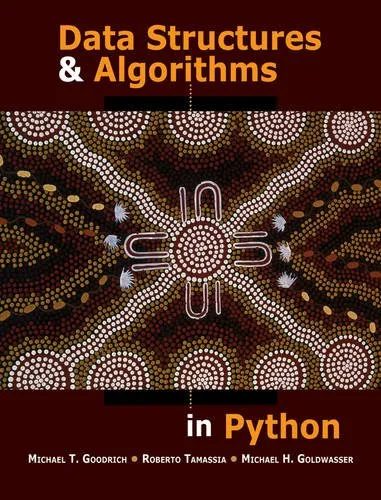
Data Structures and Algorithms in Python
Michael T. Goodrich,Roberto Tamassia,Michael H. Goldwasser
2013
View book
Book guide and evaluation
Abhishek Kumar Pandey
0 reviews
Published
pages
views
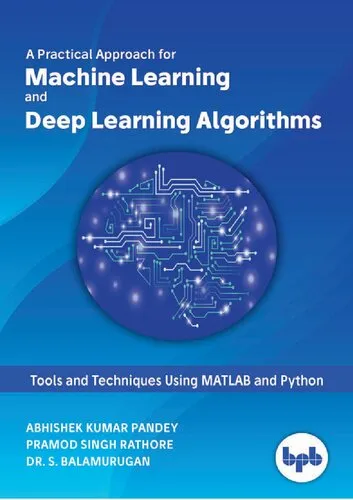
Introduction to the Book Welcome to "A Practical Approach for Machine Learning and Deep Learning Algorithms: Tools and Techniques Using MATLAB and Python", a comprehensive guide designed to transform the way you approach and understand machine learning (ML) and deep learni
Before you read
Welcome to "A Practical Approach for Machine Learning and Deep Learning Algorithms: Tools and Techniques Using MATLAB and Python", a comprehensive guide designed to transform the way you approach and understand machine learning (ML) and deep learning (DL). Whether you are a student, a professional, or an enthusiast seeking to explore the world of artificial intelligence, this book provides the perfect bridge between theory and practical implementation using two powerful programming frameworks: MATLAB and Python.
In today's era of rapid technological advances, machine learning and deep learning are at the forefront of innovation, influencing industries ranging from finance to healthcare and beyond. This book was written with the goal of demystifying these transformative technologies, making them accessible to readers of varying skill levels. By offering practical tools, hands-on examples, and intuitive explanations, this book seeks to empower readers to confidently apply ML and DL in solving real-world problems.
"A Practical Approach for Machine Learning and Deep Learning Algorithms" is a unique blend of theoretical insights and practical implementations. Divided into structured chapters, the book begins by covering the foundational concepts of machine learning, such as supervised and unsupervised learning, essential statistical techniques, and evaluation metrics. Using MATLAB and Python, the book provides clear demonstrations of how machine learning models are built, trained, and evaluated.
Progressing to deep learning, the book delves into topics such as neural networks, convolutional neural networks (CNNs), recurrent neural networks (RNNs), and other advanced architectures. Each deep learning concept is supported by step-by-step examples in both MATLAB and Python. It also explores critical topics like hyperparameter tuning, optimization techniques, and the integration of real-world datasets for practical demonstrations.
The text is peppered with coding exercises, hands-on projects, and insights into best practices to develop your applied knowledge. As a result, readers will not only gain theoretical clarity but also the skills and confidence to implement models that can address complex tasks such as image recognition, natural language processing, and predictive analytics.
"Machine learning is not just a field of study; it is the art of turning data into actionable intelligence."
"Deep learning might appear complex at first, but with the right tools and techniques, solving even the most intricate problems becomes intuitive."
"When theory meets practical application, learning transcends academic boundaries and becomes a tool for innovation."
Artificial intelligence, machine learning, and deep learning are no longer confined to academic research; they are dramatically shaping the world we live in. From groundbreaking advances in medicine to efficient business processes, these technologies are making dreams once thought impossible a reality. However, learning and applying these technologies pose challenges for many individuals, especially those without a strong background in programming or mathematics.
This is where "A Practical Approach for Machine Learning and Deep Learning Algorithms" stands out. The book combines clarity, practical relevance, and comprehensive programming examples to ensure that readers can bridge any knowledge gaps and excel in their learning journey. MATLAB is renowned for its user-friendliness and visualization capabilities, while Python, with its libraries like TensorFlow and Scikit-learn, is a dominant force in the ML/DL community. The dual coverage of these platforms makes this book invaluable for learners seeking versatility and excellence.
More importantly, the book emphasizes practical problem-solving, aligning with the skills that modern industries demand. Whether you aspire to build predictive models, craft intelligent applications, or innovate in a research environment, this book equips you with the necessary tools and knowledge to excel.
Your question is answered in the context of this title and author. Each answer uses 2 points.
0 reviews, 4.5 average out of 5
Sign in to publish a review.
Ask a focused question and learn from the community.
Related references that continue this learning path.
Michael T. Goodrich,Roberto Tamassia,Michael H. Goldwasser
Kent Lee,Steve Hubbard
Narasimha Karumanchi