Book guide and evaluation
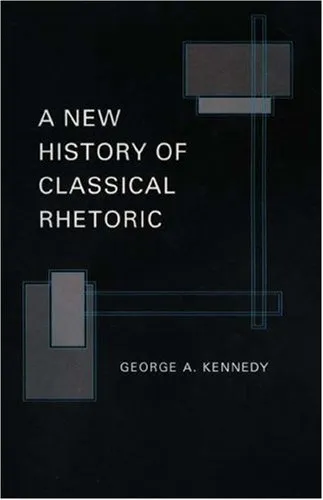
A new history of classical rhetoric : with additional discussion of late Latin rhetoric
Kennedy,George Alexander
English
Advanced
Art
4.7 / 5
0 reviews
1994
Published
314
pages
395
views
A new history of classical rhetoric : with additional discussion of late Latin rhetoric Classical rhetoric history, Late Latin rhetorical tradition A new history of classical rhetoric : with additional discussion of late Latin rhetoric offers an authoritative guide to r
Before you read
What will you get from this book?
Analytical Summary
The book A new history of classical rhetoric : with additional discussion of late Latin rhetoric maps the rich trajectory of rhetorical theory and practice from ancient Greece through the later Latin tradition. Written with scholarly rigor and an engaging touch, it offers deep insight into how rhetoric was conceived, taught, and applied across centuries.
Beginning with pre-Socratic influences, the text methodically examines the emergence of rhetoric as a formal discipline in classical Athens, its codification by Aristotle, and subsequent refinements by Roman masters such as Cicero and Quintilian. The inclusion of late Latin rhetoric, a topic often sidelined in general treatments of the subject, distinguishes this volume as both comprehensive and nuanced.
This work synthesizes primary sources, historical contexts, and critical interpretations, giving readers an authoritative understanding of the evolution of rhetorical theory. It highlights shifts in intellectual emphasis, pedagogical methods, and cultural goals, offering a coherent narrative that balances chronological clarity with thematic depth.
Key Takeaways
Readers will gain a structured understanding of rhetoric's transformation from a Greek civic art to a cornerstone of Roman education, and finally into its later Latin permutations.
First, the book underscores the adaptability of rhetorical principles to changing political and cultural environments. Second, it demonstrates the centrality of rhetoric in shaping persuasive discourse and intellectual life. Third, it makes clear that late Latin rhetorical practices, though often considered derivative, were crucial in preserving and reinterpreting classical ideals for medieval and Renaissance audiences. Fourth, it provides essential terminology and frameworks for advanced study. Finally, it contextualizes rhetoric within broader humanistic traditions.
Memorable Quotes
“Rhetoric is the art of making truth effective through discourse.” Unknown
“In late Latin rhetoric, preservation and transformation are inseparable.” Unknown
“Understanding rhetoric’s past is essential to mastering its present.” Unknown
Why This Book Matters
By bridging the gap between classical Greek origins and late Latin evolutions, this book provides a panoramic view essential for students, educators, and professionals interested in the rhetorical tradition.
Few resources match its chronological breadth and thematic precision. While Information unavailable regarding awards or publication details due to no reliable public source, the book’s academic value stands on its clear exposition and careful analysis. It serves not just as a historical account but as a guide to applying rhetorical principles today.
For classicists, philologists, historians, communication scholars, and philosophers alike, this work enriches understanding of how rhetoric shapes human thought and society. The detailed treatment of late Latin rhetoric ensures the reader sees the continuum between antiquity and the medieval world, preparing them for more specialized research.
Inspiring Conclusion
In engaging with A new history of classical rhetoric : with additional discussion of late Latin rhetoric, readers are invited into a profound dialogue with centuries of eloquence and intellectual rigor.
The book's balanced combination of historical detail, analytical clarity, and thematic cohesion makes it an indispensable resource for serious readers and scholars. Whether you wish to deepen your academic research, refine your teaching, or simply explore the heritage of persuasive discourse, this work offers both substance and inspiration. Share its insights, discuss its themes, and above all, read it with the curiosity and critical eye that the enduring art of rhetoric demands.
Ask this book
Your question is answered in the context of this title and author. Each answer uses 2 points.
Sign in to ask the book assistant.
Reader reviews
0 reviews, 4.7 average out of 5
No reviews yet
If you have read this book, help the next reader with your experience.
Write a review
Sign in to publish a review.
Reader questions and answers
Ask a focused question and learn from the community.
Sign in to ask or answer a question.
No questions yet
Be the first to ask a clear, useful question.
What to read next
Related references that continue this learning path.
The Art of Rhetoric in the Roman World 300 B.C.-A.D. 300 (A History of Rhetoric, )
George Alexander Kennedy
1972
View book