
Social Media in the Marketing Context. A State of the Art Analysis and Future Directions
Cherniece J. Plume, Yogesh K. DwivediandEmma L. Slade (Auth.)
2016
View book
Book guide and evaluation
Nicki Peter Petrikowski
0 reviews
Published
pages
views
Introduction to "A New Frontier: The Past, Present, and Future of the Search for Extraterrestrial Life" The universe has always been a stage for some of humanity's most profound questions: Are we alone in the cosmos? What other forms of life might inhabit the boundless e
Before you read
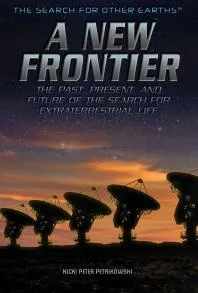
The universe has always been a stage for some of humanity's most profound questions: Are we alone in the cosmos? What other forms of life might inhabit the boundless expanse of space? "A New Frontier: The Past, Present, and Future of the Search for Extraterrestrial Life" offers a deep, thought-provoking exploration of these questions, blending science, history, philosophy, and speculation into a cohesive and engaging narrative.
In this book, I trace the journey of the search for extraterrestrial life from ancient times through modern developments and into the possibilities of the future. From early stargazers interpreting celestial phenomena to contemporary scientists peering deep into the cosmos with sophisticated telescopes, this search reflects not only our scientific aspirations but also our innate curiosity and yearning to understand our place in the universe. It’s a story of both groundbreaking discoveries and the sobering unknowns that await us.
The search for extraterrestrial life is more than a scientific pursuit; it is a cultural and philosophical endeavor as well. "A New Frontier" delves into how this search has shaped human imagination and sparked innovation in technology, art, and theory. From the study of extremophiles on Earth to listening for radio signals from distant stars, this book illustrates the multifaceted nature of this captivating field.
Prepare to embark on an adventure that spans galaxies as we explore the profound questions of what lies beyond Earth and what it means for humanity.
The book begins by exploring humanity’s earliest ideas about life beyond Earth, rooted in ancient civilizations and mythologies. It examines how incremental advancements in technology and understanding shifted these ideas from philosophical musings to serious scientific inquiry. The narrative then transitions into the 20th and 21st centuries, detailing pivotal initiatives such as the Search for Extraterrestrial Intelligence (SETI), astrobiology endeavors, and the discovery of exoplanets in the habitable zone of other star systems.
The second half of the book focuses on where we are today—armed with space telescopes like James Webb, rovers on Mars, and missions to moons like Europa and Titan, which harbor conditions potentially conducive to life. The book also reviews the challenges and limitations we face in detecting and interacting with extraterrestrial civilizations, if they exist.
Finally, the book extrapolates into what the future might hold for this extraordinary quest—from theoretical breakthroughs in interstellar travel to forming protocols for first contact. Alongside scientific speculation, societal implications are discussed, including how the discovery of extraterrestrial life could reshape our understandings of biology, religion, and humanity’s role in the grand scheme of the universe.
The narrative is both rigorous and accessible, appealing to readers with a scientific background while remaining engaging for general audiences curious about the cosmos.
"The search for extraterrestrial life is, at its core, a search for ourselves—a search to understand what it means to be alive in an incomprehensibly vast cosmos."
"Every star is a reminder of a possibility. Every planet a whisper of potential. The universe teems with questions as vast as the distances between galaxies."
The search for extraterrestrial life is more than a scientific curiosity—it is a mirror reflecting humanity's greatest hopes and fears. This book matters because it frames these profound questions in the context of our innate curiosity, technological ingenuity, and willingness to confront the unknown. At its heart, "A New Frontier" emphasizes that discovering extraterrestrial life, whether simple microbial forms or advanced civilizations, would lead to one of the most transformative moments in human history.
This book also celebrates the collective and collaborative nature of this endeavor, as astronomers, biologists, engineers, and philosophers work across disciplines to illuminate humanity’s place in the cosmos. It reminds readers that the search is not just about looking outward but also about introspection—understanding what it means to be human and how we connect to the vastness of existence.
Ultimately, "A New Frontier" is a call to dream, to explore, and to embrace the wonder of the unknown. It is an invitation to participate in one of the most exciting and consequential adventures in human history.
Your question is answered in the context of this title and author. Each answer uses 2 points.
0 reviews, 4.0 average out of 5
Sign in to publish a review.
Ask a focused question and learn from the community.
Related references that continue this learning path.
Cherniece J. Plume, Yogesh K. DwivediandEmma L. Slade (Auth.)


Anna-Teresa Tymieniecka