Loading
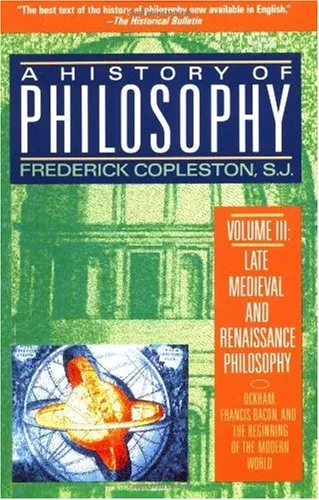
Cover of A History of Philosophy, Volume 3: Late Medieval and Renaissance Philosophy: Ockham, Francis Bacon, and the Beginning of the Modern World

Book guide and evaluation

A History of Philosophy, Volume 3: Late Medieval and Renaissance Philosophy: Ockham, Francis Bacon, and the Beginning of the Modern World

Frederick Copleston

English Unordered Unordered
5.0 / 5

1 reviews

1993

Published

246

pages

405

views

Conceived originally as a serious presentation of the development of philosophy for Catholic seminary students, Frederick Copleston's nine-volume A History Of Philosophy has journeyed far beyond the modest purpose of its author to universal acclaim as the best history of philos

Before you read

What will you get from this book?

Conceived originally as a serious presentation of the development of philosophy for Catholic seminary students, Frederick Copleston's nine-volume A History Of Philosophy has journeyed far beyond the modest purpose of its author to universal acclaim as the best history of philosophy in English.

Ask this book

Your question is answered in the context of this title and author. Each answer uses 2 points.

Sign in to ask the book assistant.

Your previous questions

was the philosophy about the christian beliefs or faith
Yes, in *A History of Philosophy, Volume 3*, I explain that much of late medieval and Renaissance philosophy was deeply intertwined with Christian belief and faith. The thinkers of the late Middle Ages—such as Ockham, Scotus, and others—worked within a Christian intellectual framework, engaging with the theological tradition that had its roots in Augustine and Aquinas. They sought to clarify, defend, or reinterpret Christian doctrines through reason, using the tools of logic and metaphysics available to them. Even when certain philosophers introduced more empirical or nominalist approaches, as Ockham did, these developments were still carried out within a broadly Christian context, often addressing questions about God’s nature, divine omnipotence, and the relationship between faith and reason. The Renaissance brought new interests—humanism, the revival of classical learning, and the beginnings of scientific thought—yet Christian faith continued to provide the background against which philosophical innovation took place. Philosophers of this period did not simply abandon religion; rather, they sought to harmonize emerging intellectual developments with their Christian worldview.

Reader reviews

1 reviews, 5.0 average out of 5

sylvester0

2026/01/05

5 / 5

liked the quick response to my question
Write a review

Sign in to publish a review.

Reader questions and answers

Ask a focused question and learn from the community.

Sign in to ask or answer a question.

No questions yet

Be the first to ask a clear, useful question.