
Book guide and evaluation
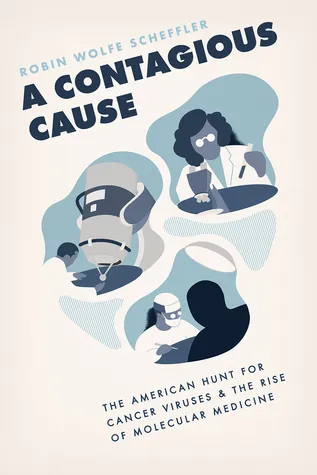
A Contagious Cause: The American Hunt for Cancer Viruses and the Rise of Molecular Medicine
Robin Wolfe Scheffler
English
Beginner
Content Marketing
4.5 / 5
0 reviews
2019
Published
391
pages
495
views
Introduction to "A Contagious Cause: The American Hunt for Cancer Viruses and the Rise of Molecular Medicine" "A Contagious Cause: The American Hunt for Cancer Viruses and the Rise of Molecular Medicine" by Robin Wolfe Scheffler is an insightful exploration into the hist
Before you read
What will you get from this book?
Introduction to "A Contagious Cause: The American Hunt for Cancer Viruses and the Rise of Molecular Medicine"
"A Contagious Cause: The American Hunt for Cancer Viruses and the Rise of Molecular Medicine" by Robin Wolfe Scheffler is an insightful exploration into the history of medical science, focusing on the relentless pursuit to understand cancer's viral origins and its crucial role in shaping modern molecular medicine. This work illuminates the evolution of cancer research, while showcasing the intricate relationship between science, society, and culture through the adaptive lens of medical technology and theory.
Detailed Summary
In "A Contagious Cause," Scheffler delves into the complex and interwoven history of cancer research, centering on the idea that cancer might be caused by infectious agents, specifically viruses. Throughout the mid-20th century, researchers embarked on a scientific odyssey, attempting to decode the viral origins of cancer, propelling advancements in molecular biology and genetic research.
The narrative spans several decades, highlighting the pivotal moments and personalities that influenced the trajectory of cancer research. Scheffler skillfully recounts how early virology research sparked both hope and controversy among the scientific community, policy makers, and the public. The book provides detailed accounts of various scientific figures and movements, illustrating how their endeavors were affected by and contributed to broader societal changes, regulatory frameworks, and scientific paradigms.
Scheffler's work explores key historical developments, such as the establishment of the National Cancer Institute and the intense competition for research funding during the Cold War era. These episodes underscore the significance of cancer virus research in the broader context of American scientific and political history. By weaving together scientific inquiry with socio-political dynamics, the book highlights how these elements collectively influenced the emergence of molecular biology and genomics as defining fields in contemporary science.
Key Takeaways
"A Contagious Cause" offers several key insights into the nature of scientific progress and its societal implications:
- The pursuit of cancer virus research was driven by both scientific curiosity and political agendas, revealing the complex interplay between scientific breakthroughs and government policies.
- The initial belief in cancer viruses as a predominant cause spurred technological advancements that would lay the groundwork for molecular biology and genetic engineering.
- Understanding the history of cancer virus research helps illustrate how scientific concepts evolve and adapt in response to changing social, political, and technological landscapes.
- The book highlights the role of collaboration and competition in scientific research, and how these dynamics can both propel and hinder scientific advancements.
Famous Quotes from the Book
Some notable excerpts that underscore the essence of the narrative include:
"The quest for cancer viruses was a product not only of the laboratory but also of the United States' position in the world of the twentieth century."
"Scientific beliefs must continually adapt to accommodate the shifting terrain of evidence and understanding."
Why This Book Matters
"A Contagious Cause" offers significant contributions to both historical and contemporary understandings of science and medicine. This meticulously researched book sheds light on a transformative period in medical history, illustrating how past beliefs and strategies have directly influenced current approaches to cancer and other complex diseases. For scholars and general readers alike, it provides a comprehensive account of a defining epoch in scientific inquiry.
Furthermore, the work is valuable for increasing public understanding of the scientific process, emphasizing the trial-and-error nature of research, and the societal forces that shape scientific discoveries. It encourages readers to reflect on the impact of historical medical research on present-day pursuits and challenges, instilling a deeper appreciation for the evolution of scientific thought and practice.
Ask this book
Your question is answered in the context of this title and author. Each answer uses 2 points.
Sign in to ask the book assistant.
Reader reviews
0 reviews, 4.5 average out of 5
No reviews yet
If you have read this book, help the next reader with your experience.
Write a review
Sign in to publish a review.
Reader questions and answers
Ask a focused question and learn from the community.
Sign in to ask or answer a question.
No questions yet
Be the first to ask a clear, useful question.
What to read next
Related references that continue this learning path.


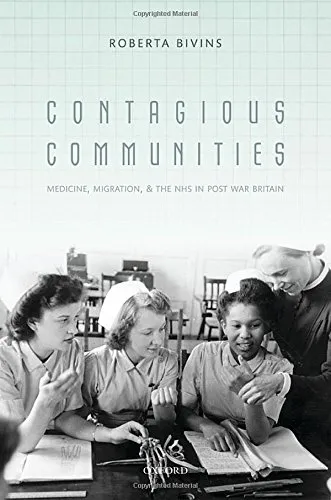
Contagious communities : medicine, migration, and the NHS in post-war Britain
Bivins,Roberta E
2015
View book