SOFTWARE ARCHITECTURE WITH C# 10 AND .NET 6 : develop software solutions using... microservices, devops, ef core, and design pattern.
GABRIEL ABBRUZZESE FRANCESCO BAPTISTA
2022
View book
Book guide and evaluation
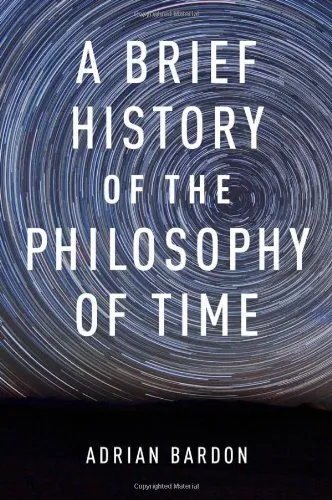
Adrian Bardon
0 reviews
Published
pages
views
Introduction to 'A Brief History of the Philosophy of Time' Time is one of the most intriguing subjects of philosophical inquiry, weaving its way through metaphysics, epistemology, and even the philosophy of science. 'A Brief History of the Philosophy of Time' is an intell
Before you read
Time is one of the most intriguing subjects of philosophical inquiry, weaving its way through metaphysics, epistemology, and even the philosophy of science. 'A Brief History of the Philosophy of Time' is an intellectual journey that brings clarity to this abstract yet ubiquitous concept. Delving into the works of famous philosophers from ancient to modern times, the book elucidates how our understanding of time has evolved and why it matters.
The book navigates through a historical trajectory, starting with ancient philosophical inquiries by figures like Parmenides and Zeno, who first posed paradoxes about the nature of space and time. Moving through the Middle Ages, the book explores how Saint Augustine posited the idea of time as a construct of the human mind rather than a physical entity.
The journey continues into the modern era with the advent of Newtonian physics, where time was seen as absolute and independent—a backdrop to the unfolding of the universe. It proceeds toward the revolutionary ideas of Einstein's relativity, which challenge the notion of an absolute time, expanding into discussions about time's relative nature as perceived by different observers.
The book also pays considerable attention to contemporary debates, such as the tension between A-theorists, who argue that the present is special and objective, and B-theorists, who contend that all points in time are equally real. Through careful exposition of these theories and their implications for free will, causality, and the human experience, the text provides a comprehensive overview for both novices and seasoned philosophers.
Here are some thought-provoking quotes from 'A Brief History of the Philosophy of Time':
"Time is both an enigma and a daily reality that encapsulates the existential riddle of our being."
"To understand time is to understand a fundamental aspect of the universe and our place within it."
"Philosophy of time owes its perplexing nature to its dual identity as both a scientific and philosophical problem."
The relevance of 'A Brief History of the Philosophy of Time' lies in its ability to demystify one of the most profound yet nebulous concepts encountered by humanity. In a world dictated by schedules and predictability, understanding time transcends mere academic curiosity; it is critical for shaping our perceptions of free will, identity, and even our mortality.
Offering a detailed yet accessible exploration of philosophical and scientific perspectives, this book serves as an invaluable resource for anyone interested in pondering one of the most captivating subjects in human thought. Its contribution to philosophy is not just historical but also contemporary, paving the way for new explorations in the understanding of time and its philosophical implications.
Your question is answered in the context of this title and author. Each answer uses 2 points.
0 reviews, 4.5 average out of 5
Sign in to publish a review.
Ask a focused question and learn from the community.
Related references that continue this learning path.
GABRIEL ABBRUZZESE FRANCESCO BAPTISTA