info
2025/12/17
5 / 5
The Core Thesis
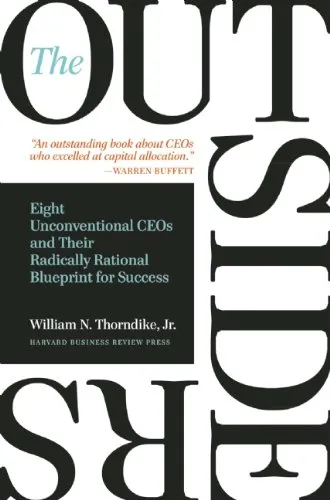
In The Outsiders, Thorndike argues that the most successful CEOs aren’t necessarily the ones who grow the biggest companies or have the highest public profiles. Instead, they are the masters of capital allocation. He profiles eight "outsider" CEOs—including Katharine Graham (The Washington Post) and Henry Singleton (Teledyne)—who outperformed the S&P 500 by massive margins using a "radically rational" approach.
The "Outsider" Blueprint
The book identifies several unconventional traits shared by these leaders:
Capital Allocation over Operations: They viewed themselves as investors first and managers second.
Independent Thinking: They ignored Wall Street trends. They didn't pay dividends if the money could be better used elsewhere, and they weren't afraid to shrink their companies through spin-offs.
The Power of Buybacks: They aggressively repurchased their own stock when it was undervalued, a move that significantly boosted shareholder value over the long term.
Frugality and Decentralization: They maintained tiny corporate headquarters and gave their business unit managers extreme autonomy.
Key Takeaway
The ultimate metric of success for these CEOs was not total revenue or employee count, but the increase in per-share value. Thorndike shows that by focusing on cash flow rather than reported earnings, and by being patient enough to wait for the right opportunities, these "outsiders" achieved legendary results.
"Essentially, the Outsider CEOs were more like elite investors than traditional managers."
Why It Matters Today
This book is a must-read because it challenges the "cult of the celebrity CEO." It teaches that business success is about the disciplined deployment of resources. It’s an excellent guide for investors looking to identify high-quality leadership and for managers looking to optimize their own decision-making.