moises ferreira
2025/09/19
5 / 5
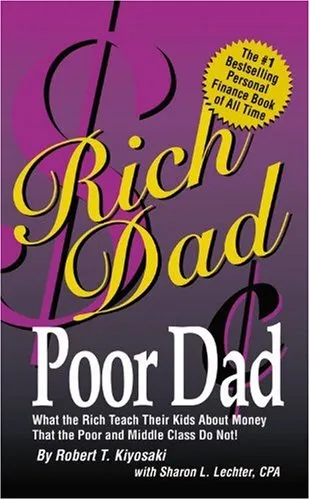
Robert Kiyosaki's "Rich Dad Poor Dad" has been a cornerstone of personal finance literature for over two decades, and for good reason. It's a book that fundamentally shifts the reader's perspective on money, wealth, and the traditional path of "go to school, get a good job, and save." The book's central narrative, comparing the financial philosophies of Kiyosaki's highly educated but financially struggling "Poor Dad" and his friend's entrepreneurial and wealthy "Rich Dad," is a powerful and engaging way to illustrate his core concepts.
The primary strength of "Rich Dad Poor Dad" lies in its ability to simplify complex financial ideas. The distinction between an asset (something that puts money in your pocket) and a liability (something that takes money out of your pocket) is a particularly resonant and easily digestible concept that has empowered many readers to re-evaluate their spending habits. The book champions financial literacy, encouraging readers to invest in their financial education to understand how money works. This emphasis on building wealth through assets like real estate, businesses, and other investments, rather than relying solely on a traditional salary, has been a wake-up call for countless individuals stuck in the "rat race."
However, "Rich Dad Poor Dad" is not without its critics. Many financial experts point to the lack of concrete, actionable advice in the book. While it excels at shifting mindset, it's light on the specific "how-to" of investing. Some also criticize the book for its anecdotal nature and the questioning of whether "Rich Dad" was a real person or a composite character. Furthermore, some of the investment strategies hinted at in the book, such as using debt to acquire assets, can be risky for inexperienced investors.
Despite these criticisms, the enduring popularity of "Rich Dad Poor Dad" is a testament to its impact. It has successfully ignited an interest in personal finance for a massive audience and has encouraged a generation of readers to take control of their financial futures. While it shouldn't be the only financial book on your shelf, it serves as an excellent starting point for anyone looking to challenge their conventional thinking about money and begin the journey toward financial independence.