معرفی و ارزیابی کتاب
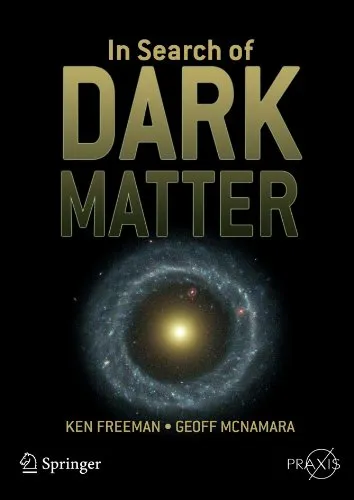
In search of dark matter
Ken Freeman,Geoff McNamara
English
Intermediate
رمان
4.4 / 5
0 نظر
2006
سال انتشار
164
صفحه
268
بازدید
The title of this book caught my attention because so-called Dark Matter is an important and puzzling issue in modern astronomy. In brief, the stars we see have insufficient mass to account for the gravity of galaxies and galactic clusters. The missing mass must reside in non-lum
پیش از خواندن
این کتاب چه چیزی به شما میدهد؟
The title of this book caught my attention because so-called Dark Matter is an important and puzzling issue in modern astronomy. In brief, the stars we see have insufficient mass to account for the gravity of galaxies and galactic clusters. The missing mass must reside in non-luminous, i.e. Dark Matter.
This book starts out promisingly enough. Ken Freeman and Geoff McNamara do a good job of framing the question and explaining how astronomers found a discrepancy between the amount of visible matter and the observable gravitational effects. After the first few chapters the book loses its way. It becomes more of a survey of the ideas on the subject rather than an effort to choose between them and present a coherent point of view. It is clear that ordinary matter in the form of protons, neutrons, electrons, etc is not present in sufficient quantities to explain the gravitational effects. Something else with a specific distribution that can be inferred from astronomic observations must account for the remaining gravitational effects. This leads to somewhat vague discussions of the possible mass of neutrinos, black holes (massive and small) and of exotic particles like WIMPS (weakly interacting massive particles) and axions. At the end of it all the authors are not inclined to share with us where their preference lies. Instead, they divide the missing mass into Hot Dark Matter (HDM) and Cold Dark Matter (CDM). The difference between them is poorly explained, but at the end the authors tentatively come down on the side of CDM, albeit with caveats. Judging by the tenor of the last few chapters they seem to feel that they have provided a satisfactory account.
The last chapter is actually the best because it is co-authored by Charles Lineweaver, who himself being a contributor to constraints on the cosmological constant is willing to take a clear stand. Unfortunately, this is also the point where it is revealed that in terms of the cosmological constant (omega) baryonic matter accounts for 0.04 of the contents of the universe, (cold) dark matter for 0.27 but a huge 0.73 is Dark Energy (the total being close to the desired 1.0). Dark energy barely gets and discussion. Although this preponderance of dark energy should come as no surprise to the interested layman who has kept up to date with developments in astronomy, it does seem to beg a whole different book with another title.
Notwithstanding the closing paragraph's self-congratulatory but ambiguous remarks, readers will want to go in search of dark energy.
از این کتاب بپرس
پرسشت با عنوان و نویسنده همین کتاب برای دستیار ارسال میشود. هر پاسخ ۲ امتیاز مصرف میکند.
وارد شوید تا بتوانید از دستیار کتاب بپرسید.
نظر خوانندگان
0 نظر، میانگین 4.4 از ۵
هنوز نظری ثبت نشده
اگر این کتاب را خواندهاید، تجربهتان را با دیگران به اشتراک بگذارید.
نظر خودت را بنویس
وارد شوید تا نظر خود را ثبت کنید.
پرسش و پاسخ خوانندگان
سؤال مشخص بپرس و از تجربه جامعه استفاده کن.
وارد شوید تا سؤال بپرسید یا پاسخ بدهید.
هنوز پرسشی ثبت نشده
اولین سؤال روشن و مفید را شما مطرح کنید.
بعد از این چه بخوانم؟
منابع مرتبط برای ادامه همین مسیر.
Crossing the Line: Violence, Play, and Drama in Naval Equator Traditions
Simon J. Bronner
2007
مشاهدهٔ کتاب