merkousha
2024/04/23
5 / 5
Evolving Workweeks and Utopian Futures: Exploring Economic Predictions from Keynes to Bostrom
John Minard Keynes, perhaps the most prominent economist of the 20th century, has predicted in his book “Economic Possibilities for Our Grandchildren” that in 100 years his wealthy descendants only need to work 15 hours per week. The book had been published in 1930 and we are close to its one hundredth anniversary. The prediction has not happened quite precisely. However it is true that the working hours have been diminishing steadily. In the developed countries, in the late 19th century average working hours were 60 hours per week. Nowadays, the weekly working hours are less than 40 hours in developing countries. What would happen in the next hundred years? There are very different approaches to this question, some are very pessimistic, suggesting that there is a possibility that the human race would be wiped out of the planet. The other approach is very optimistic. What if AI becomes so powerful and so beneficial that it takes care of everything? This would bring the cost of all the economically valuable works to zero. That is literally an Utopia by definition.
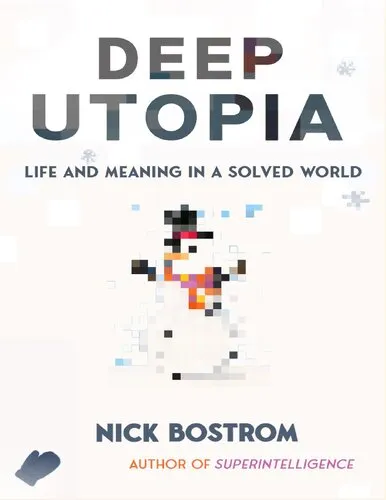
Nick Bostrom tried to answer this question in his new book named “Deep Utopia”. Mr. Bostrom talks about the “post scarcity” era in which there are not any limits for whatever we need or consume. This however might not be completely true. There are large physical limitations to humans, especially by the limitation of land. Space exploration might be a solution here.
There is another limitation, “positional goods”. Even if the AI excels in art, literature and music and surpasses human potential. There is a good possibility that people put greater value to the works of their fellow human beings. Same has happened before. When cameras became widespread in the 19th century. People thought that painting portraits would lose their value and eventually there was no need for this craft. As cameras are even more precise. However, this did not happen. Paintings, both portraits and landscapes became a luxury item which only wealthy people could afford. The same would happen, even if the AI bypasses the humans in art. The rich would pay hefty amounts for a good piece of art made by human artists. In fact this is a problem mentioned by economist Fred Hirsch in 1977. He argued in his book that as the wealth increases the greater fraction of human desires consists of “positional goods”.
Mr.Bostrom talks about the “paradox of progress”. Although most humans would like to have better conditions. If the technology becomes super abundant and cheap some people might go for drastic challenges like reengineering civilization or colonizing other plants. Economists for long assumed that human desires are unlimited and there are unlimited things people would like to consume.